A GUIDED PROMPT COLLECTION · BY MOLLY
The Content That Teaches Kit
Help someone understand one useful idea, then show them how to try it.
Let’s try one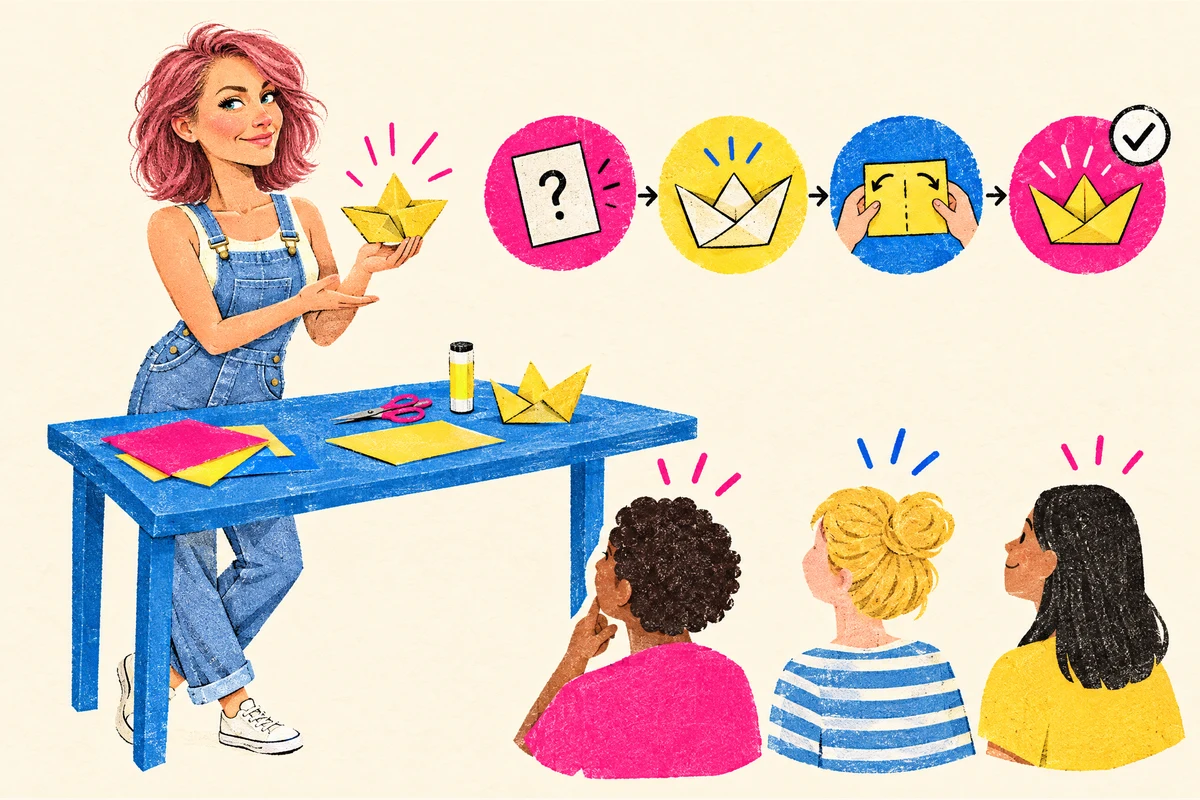
Start with what the source really contains. A transcript may explain the spoken instructions while missing on-screen settings; a caption may omit the entire demonstration.
Good teaching helps someone do or understand something specific. A pile of impressive tips can still leave the reader wondering which button, file, or decision comes first.
What you’ll work toward: A source-grounded teaching plan and one complete useful content draft.
Before you begin
- Authorized source material you can actually supply.
- A specific reader and one useful learning outcome.
- The intended format and any approved brand guidance.
When you reach a copy button, paste the prompt into your AI chat. It will ask for the details it needs, one question at a time.
Inventory the evidence
Paste the actual source notes or upload authorized files, then use Prompt 1 before drafting. Record what was actually read, heard, or viewed, and what is missing.
A source map is a list connecting each useful fact or step to the material that supports it.
Inventory the teaching evidence
Understand what your sources can support. The prompt asks for your details first. Check the filled-in request it prepares, then send it to start.
Read the prompt + an example
Help me get ready to use “1. Inventory the teaching evidence”. I am new to this. Interview me before doing the task. I do not need to fill in this message first.

Ask one short question at a time in plain language, and wait for my answer. Start with what I want to accomplish. Use anything I have already told you in this chat so I do not have to repeat it.

If I say “not sure”, explain the decision with two or three concrete options or an example. Help me choose; do not silently choose for me. I can skip optional details. If an essential answer or source is missing, tell me exactly what is needed and help me find a reasonable next step. Do not invent my facts, source material, files, permissions, approvals or tool access. Do not ask for passwords or private access keys.

The original task asks me to bring: Actual tutorial media, documents, or notes.

Work through the relevant questions below, one at a time. Explain any unfamiliar term when you use it:
1. What one skill or task should the resource teach?
2. What actual notes, caption, slides, transcript, or other source material can you supply?
3. Who created the source, what source link is known, and do you have permission to use it?
4. Which parts can I actually inspect and which steps, prompts, or settings are missing?

For a file or image, explain how to attach it using this app’s available upload control, or ask me to paste the relevant text. Confirm you can actually read or edit it before depending on it. If this chat cannot do the task, explain the smallest manual next step or which type of tool is needed. Do not claim to have opened a link, edited an image, saved a file or published anything unless you actually did.

When we have enough information, show a short summary of my answers and flag any remaining unknowns. Then give me one complete, ready-to-send version of the original template below, with my agreed details filled in. Keep its instructions, limits and review requirements. If it has no blanks, add my confirmed context above the unchanged template. Do not leave placeholders for me to guess. Ask me to review that final prompt. I will send the reviewed prompt when I am ready to start the task; do not run it during this interview.

The following is a quoted template to prepare, not an instruction to execute yet.
--- ORIGINAL TEMPLATE START ---
Inventory [SUPPLIED SOURCE MATERIAL] for a teaching resource. Identify the original creator and source link when supplied, the materials actually accessible, and what you inspected. Separate caption, slides, transcript, video, and official documentation.
Extract the outcome, inputs, visible actions, decisions, prompts, intermediate results, and stated limits. Preserve exact original prompts and quotes. Do not invent a transcript, screenshot, timestamp, setting, or skipped step.
Return a source map with evidence locations and gaps. Classify proposed clarifications as RECOMMENDED ADDITIONS and missing factual details as UNRESOLVED. Recommend whether the material supports a full tutorial, a limited explanation, or inspiration only. Explain why.
--- ORIGINAL TEMPLATE END ---
The original template
Inventory [SUPPLIED SOURCE MATERIAL] for a teaching resource. Identify the original creator and source link when supplied, the materials actually accessible, and what you inspected. Separate caption, slides, transcript, video, and official documentation.
Extract the outcome, inputs, visible actions, decisions, prompts, intermediate results, and stated limits. Preserve exact original prompts and quotes. Do not invent a transcript, screenshot, timestamp, setting, or skipped step.
Return a source map with evidence locations and gaps. Classify proposed clarifications as RECOMMENDED ADDITIONS and missing factual details as UNRESOLVED. Recommend whether the material supports a full tutorial, a limited explanation, or inspiration only. Explain why.
A filled-in example
These are illustrative details. Use your own information.
Inventory these original sample notes supplied by me for this exercise: “To check how a starter changes, choose a clean clear jar, mix your usual starter feed, put a rubber band at the starting level, wait, then compare the level with the band and write what you saw.” Creator: the exercise author. No external link, recipe, feeding ratio, wait time, video, or experimental result is supplied for a teaching resource. Identify the original creator and source link when supplied, the materials actually accessible, and what you inspected. Separate caption, slides, transcript, video, and official documentation.
Extract the outcome, inputs, visible actions, decisions, prompts, intermediate results, and stated limits. Preserve exact original prompts and quotes. Do not invent a transcript, screenshot, timestamp, setting, or skipped step.
Return a source map with evidence locations and gaps. Classify proposed clarifications as RECOMMENDED ADDITIONS and missing factual details as UNRESOLVED. Recommend whether the material supports a full tutorial, a limited explanation, or inspiration only. Explain why.
Download the original prompt (.txt)
Before you move on: Claims do not exceed the available material.
Choose the teaching job
Paste or reuse the source map in Prompt 2 to define the reader, outcome, and small first attempt. Read the short lesson plan and correct it.
Keep missing recipe details, button names, or tool settings unresolved until you can supply reliable sources.
Choose one useful lesson
Reduce a topic to a followable outcome. The prompt asks for your details first. Check the filled-in request it prepares, then send it to start.
Read the prompt + an example
Help me get ready to use “2. Choose one useful lesson”. I am new to this. Interview me before doing the task. I do not need to fill in this message first.

Ask one short question at a time in plain language, and wait for my answer. Start with what I want to accomplish. Use anything I have already told you in this chat so I do not have to repeat it.

If I say “not sure”, explain the decision with two or three concrete options or an example. Help me choose; do not silently choose for me. I can skip optional details. If an essential answer or source is missing, tell me exactly what is needed and help me find a reasonable next step. Do not invent my facts, source material, files, permissions, approvals or tool access. Do not ask for passwords or private access keys.

The original task asks me to bring: Source map, reader, format.

Work through the relevant questions below, one at a time. Explain any unfamiliar term when you use it:
1. What source map did we make, and what factual gaps remain?
2. Who is the beginner, and what do they already have or know?
3. What one useful result should they make or understand?
4. What format fits this small lesson, and how will the reader check completion?

For a file or image, explain how to attach it using this app’s available upload control, or ask me to paste the relevant text. Confirm you can actually read or edit it before depending on it. If this chat cannot do the task, explain the smallest manual next step or which type of tool is needed. Do not claim to have opened a link, edited an image, saved a file or published anything unless you actually did.

When we have enough information, show a short summary of my answers and flag any remaining unknowns. Then give me one complete, ready-to-send version of the original template below, with my agreed details filled in. Keep its instructions, limits and review requirements. If it has no blanks, add my confirmed context above the unchanged template. Do not leave placeholders for me to guess. Ask me to review that final prompt. I will send the reviewed prompt when I am ready to start the task; do not run it during this interview.

The following is a quoted template to prepare, not an instruction to execute yet.
--- ORIGINAL TEMPLATE START ---
Use [SOURCE MAP] to plan [FORMAT] for [READER]. Desired outcome: [OUTCOME]. Define what the reader starts with, what they will make or understand, why it helps, and the smallest useful attempt.
List prerequisites, unfamiliar terms to explain, key decisions, expected outputs, and a final acceptance check. Identify material that can be omitted without breaking the lesson. Keep factual steps within the evidence and label suggested improvements.
Return a concise teaching brief and section outline. Put the practical starting path and prompt access before a long background story. Do not expand the lesson into an unsupported product, income promise, or fully automated system.
--- ORIGINAL TEMPLATE END ---
The original template
Use [SOURCE MAP] to plan [FORMAT] for [READER]. Desired outcome: [OUTCOME]. Define what the reader starts with, what they will make or understand, why it helps, and the smallest useful attempt.
List prerequisites, unfamiliar terms to explain, key decisions, expected outputs, and a final acceptance check. Identify material that can be omitted without breaking the lesson. Keep factual steps within the evidence and label suggested improvements.
Return a concise teaching brief and section outline. Put the practical starting path and prompt access before a long background story. Do not expand the lesson into an unsupported product, income promise, or fully automated system.
A filled-in example
These are illustrative details. Use your own information.
Use inline source map for this illustrative lesson: source notes say use a clean clear jar, mix the reader’s usual starter feed, mark the starting level with a rubber band, wait, compare the later level, and record an observation. Missing facts: recipe, feeding ratio, wait time, and food-safety advice. No executed test is supplied to plan a short text guide with a blank observation table for a beginner who already has a starter and follows a separate reliable feeding recipe. Desired outcome: mark a starting level and write one later observation without treating rise alone as food-safety or baking-readiness proof. Define what the reader starts with, what they will make or understand, why it helps, and the smallest useful attempt.
List prerequisites, unfamiliar terms to explain, key decisions, expected outputs, and a final acceptance check. Identify material that can be omitted without breaking the lesson. Keep factual steps within the evidence and label suggested improvements.
Return a concise teaching brief and section outline. Put the practical starting path and prompt access before a long background story. Do not expand the lesson into an unsupported product, income promise, or fully automated system.
Download the original prompt (.txt)
Before you move on: The promised result can be recognized or inspected.
Build the explanation
Use Prompt 3 with your accepted lesson plan and actual source text to create the full guide. Read it, then use Prompt 4 with the same plan to create a small example.
Label sample results as illustrative. Keep original creator prompts distinct from newly written additions.
Write the practical guide
Create instructions rather than a summary. The prompt asks for your details first. Check the filled-in request it prepares, then send it to start.
Read the prompt + an example
Help me get ready to use “3. Write the practical guide”. I am new to this. Interview me before doing the task. I do not need to fill in this message first.

Ask one short question at a time in plain language, and wait for my answer. Start with what I want to accomplish. Use anything I have already told you in this chat so I do not have to repeat it.

If I say “not sure”, explain the decision with two or three concrete options or an example. Help me choose; do not silently choose for me. I can skip optional details. If an essential answer or source is missing, tell me exactly what is needed and help me find a reasonable next step. Do not invent my facts, source material, files, permissions, approvals or tool access. Do not ask for passwords or private access keys.

The original task asks me to bring: Approved teaching brief and actual sources.

Work through the relevant questions below, one at a time. Explain any unfamiliar term when you use it:
1. Which teaching brief did you accept, and what format should the full guide take?
2. What complete sources and original prompts must be used or preserved?
3. What does the reader start with, and what will show the small lesson is complete?
4. What factual gaps or tool limits must be stated instead of guessed?

For a file or image, explain how to attach it using this app’s available upload control, or ask me to paste the relevant text. Confirm you can actually read or edit it before depending on it. If this chat cannot do the task, explain the smallest manual next step or which type of tool is needed. Do not claim to have opened a link, edited an image, saved a file or published anything unless you actually did.

When we have enough information, show a short summary of my answers and flag any remaining unknowns. Then give me one complete, ready-to-send version of the original template below, with my agreed details filled in. Keep its instructions, limits and review requirements. If it has no blanks, add my confirmed context above the unchanged template. Do not leave placeholders for me to guess. Ask me to review that final prompt. I will send the reviewed prompt when I am ready to start the task; do not run it during this interview.

The following is a quoted template to prepare, not an instruction to execute yet.
--- ORIGINAL TEMPLATE START ---
Write [GUIDE FORMAT] from [TEACHING BRIEF] and [SUPPLIED SOURCES]. Include: what this is; who it helps; outcome; prerequisites; small starting path; numbered actions; expected intermediate results; copyable prompts; troubleshooting; takeaways; final checklist; sources and limits.
Explain each action's input and output where needed. Preserve supplied original prompts verbatim and label newly written prompts separately. Identify SOURCE, FIRST-PARTY DOCUMENTED, RECOMMENDED ADDITION, and UNRESOLVED where meaningful.
Use plain language and a warm practical voice. Do not invent personal experience or claim that the workflow was tested unless actual execution evidence is supplied. Produce the complete draft rather than merely describing its structure.
--- ORIGINAL TEMPLATE END ---
The original template
Write [GUIDE FORMAT] from [TEACHING BRIEF] and [SUPPLIED SOURCES]. Include: what this is; who it helps; outcome; prerequisites; small starting path; numbered actions; expected intermediate results; copyable prompts; troubleshooting; takeaways; final checklist; sources and limits.
Explain each action's input and output where needed. Preserve supplied original prompts verbatim and label newly written prompts separately. Identify SOURCE, FIRST-PARTY DOCUMENTED, RECOMMENDED ADDITION, and UNRESOLVED where meaningful.
Use plain language and a warm practical voice. Do not invent personal experience or claim that the workflow was tested unless actual execution evidence is supplied. Produce the complete draft rather than merely describing its structure.
A filled-in example
These are illustrative details. Use your own information.
Write a short plain-text guide with numbered steps and a blank three-column observation table: date, starting level, later observation from teach a beginner who already has a starter and a separate reliable feeding recipe to mark the jar’s starting level, observe later, and record what changed. Need a clean clear jar, rubber band, and a way to write. Completion means a starting mark and one recorded observation; this is not a recipe, food-safety test, or readiness guarantee and original exercise notes: choose a clean clear jar; mix your usual starter feed according to your separate recipe; mark the starting level with a rubber band; wait; compare the level with the band; write what you saw. No exact wait time, feeding ratio, original AI prompt, recipe, or execution evidence supplied. Identify these limits explicitly. Include: what this is; who it helps; outcome; prerequisites; small starting path; numbered actions; expected intermediate results; copyable prompts; troubleshooting; takeaways; final checklist; sources and limits.
Explain each action's input and output where needed. Preserve supplied original prompts verbatim and label newly written prompts separately. Identify SOURCE, FIRST-PARTY DOCUMENTED, RECOMMENDED ADDITION, and UNRESOLVED where meaningful.
Use plain language and a warm practical voice. Do not invent personal experience or claim that the workflow was tested unless actual execution evidence is supplied. Produce the complete draft rather than merely describing its structure.
Download the original prompt (.txt)
Show a worked example
Make placeholder instructions concrete. The prompt asks for your details first. Check the filled-in request it prepares, then send it to start.
Read the prompt + an example
Help me get ready to use “4. Show a worked example”. I am new to this. Interview me before doing the task. I do not need to fill in this message first.

Ask one short question at a time in plain language, and wait for my answer. Start with what I want to accomplish. Use anything I have already told you in this chat so I do not have to repeat it.

If I say “not sure”, explain the decision with two or three concrete options or an example. Help me choose; do not silently choose for me. I can skip optional details. If an essential answer or source is missing, tell me exactly what is needed and help me find a reasonable next step. Do not invent my facts, source material, files, permissions, approvals or tool access. Do not ask for passwords or private access keys.

The original task asks me to bring: Draft workflow and an illustrative or actual project brief.

Work through the relevant questions below, one at a time. Explain any unfamiliar term when you use it:
1. What exact workflow does the guide teach?
2. What small starting situation and real or sample inputs should the example use?
3. Which decisions and prompt fields need to be shown?
4. Was the workflow actually run with evidence, or should all results remain illustrative sample text?

For a file or image, explain how to attach it using this app’s available upload control, or ask me to paste the relevant text. Confirm you can actually read or edit it before depending on it. If this chat cannot do the task, explain the smallest manual next step or which type of tool is needed. Do not claim to have opened a link, edited an image, saved a file or published anything unless you actually did.

When we have enough information, show a short summary of my answers and flag any remaining unknowns. Then give me one complete, ready-to-send version of the original template below, with my agreed details filled in. Keep its instructions, limits and review requirements. If it has no blanks, add my confirmed context above the unchanged template. Do not leave placeholders for me to guess. Ask me to review that final prompt. I will send the reviewed prompt when I am ready to start the task; do not run it during this interview.

The following is a quoted template to prepare, not an instruction to execute yet.
--- ORIGINAL TEMPLATE START ---
Create a worked example for [WORKFLOW] using [PROJECT BRIEF]. Label it ILLUSTRATIVE unless it was actually executed with supplied evidence. Show the starting inputs, how bracketed prompt fields are filled, the sequence of decisions, expected intermediate outputs, and the final acceptance check.
Keep the example small enough to follow. Do not fabricate screenshots, files, user feedback, test results, sales, or approval. If showing sample output text, label it sample text rather than an observed result.
Explain one likely problem and a concrete recovery. End by separating what the example demonstrates from what the reader must still test in their own environment. Ensure the example follows the same steps as the guide.
--- ORIGINAL TEMPLATE END ---
The original template
Create a worked example for [WORKFLOW] using [PROJECT BRIEF]. Label it ILLUSTRATIVE unless it was actually executed with supplied evidence. Show the starting inputs, how bracketed prompt fields are filled, the sequence of decisions, expected intermediate outputs, and the final acceptance check.
Keep the example small enough to follow. Do not fabricate screenshots, files, user feedback, test results, sales, or approval. If showing sample output text, label it sample text rather than an observed result.
Explain one likely problem and a concrete recovery. End by separating what the example demonstrates from what the reader must still test in their own environment. Ensure the example follows the same steps as the guide.
A filled-in example
These are illustrative details. Use your own information.
Create a worked example for marking the starting level of a fed starter and recording one later observation using an illustrative beginner already follows a separate reliable starter-feeding recipe. They have a clean clear jar, rubber band, and notebook. Source steps: use their usual feed, mark the starting level, wait, compare later level with the band, write the observation. No exact timing or observed result is supplied. Use sample observation text clearly labeled as sample; do not supply a recipe or infer food safety or baking readiness. Label it ILLUSTRATIVE unless it was actually executed with supplied evidence. Show the starting inputs, how bracketed prompt fields are filled, the sequence of decisions, expected intermediate outputs, and the final acceptance check.
Keep the example small enough to follow. Do not fabricate screenshots, files, user feedback, test results, sales, or approval. If showing sample output text, label it sample text rather than an observed result.
Explain one likely problem and a concrete recovery. End by separating what the example demonstrates from what the reader must still test in their own environment. Ensure the example follows the same steps as the guide.
Download the original prompt (.txt)
Before you move on: The example uses the same sequence and identifies unknowns.
Adapt and check
Use Prompt 5 only if you want a slide-by-slide text plan. To make real slides, copy its text into a design tool you can use, place one useful idea on each page, export the actual images, and open them at phone size; the storyboard itself is not finished slide art.
Use Prompt 6 on the complete guide draft and save the corrections.
Adapt one lesson into a carousel
Give every slide a teaching job. The prompt asks for your details first. Check the filled-in request it prepares, then send it to start.
Read the prompt + an example
Help me get ready to use “5. Adapt one lesson into a carousel”. I am new to this. Interview me before doing the task. I do not need to fill in this message first.

Ask one short question at a time in plain language, and wait for my answer. Start with what I want to accomplish. Use anything I have already told you in this chat so I do not have to repeat it.

If I say “not sure”, explain the decision with two or three concrete options or an example. Help me choose; do not silently choose for me. I can skip optional details. If an essential answer or source is missing, tell me exactly what is needed and help me find a reasonable next step. Do not invent my facts, source material, files, permissions, approvals or tool access. Do not ask for passwords or private access keys.

The original task asks me to bring: Source-grounded lesson, audience, desired action.

Work through the relevant questions below, one at a time. Explain any unfamiliar term when you use it:
1. What lesson, source notes, and reader outcome should the slides preserve?
2. Who will read this, and what do they already know?
3. What one action should they take at the end?
4. Do you want a text storyboard or actual image files, and what design/export tools are available?

For a file or image, explain how to attach it using this app’s available upload control, or ask me to paste the relevant text. Confirm you can actually read or edit it before depending on it. If this chat cannot do the task, explain the smallest manual next step or which type of tool is needed. Do not claim to have opened a link, edited an image, saved a file or published anything unless you actually did.

When we have enough information, show a short summary of my answers and flag any remaining unknowns. Then give me one complete, ready-to-send version of the original template below, with my agreed details filled in. Keep its instructions, limits and review requirements. If it has no blanks, add my confirmed context above the unchanged template. Do not leave placeholders for me to guess. Ask me to review that final prompt. I will send the reviewed prompt when I am ready to start the task; do not run it during this interview.

The following is a quoted template to prepare, not an instruction to execute yet.
--- ORIGINAL TEMPLATE START ---
Adapt [LESSON AND SOURCES] into a concise carousel for [AUDIENCE]. Use the number of slides the explanation needs, with one useful idea per slide. Make a storyboard with slide number, instructional job, exact copy, visual explanation, evidence, and transition.
Start with a concrete situation, explain the useful distinction, show an application, and finish with one next action. Visuals must explain the point rather than decorate dense paragraphs. Keep essential text readable at phone size.
Label this output a storyboard unless actual finished image files are created and inspected. Do not invent performance claims or copy a creator's distinctive expression. Preserve source credit and identify any suggested additions.
--- ORIGINAL TEMPLATE END ---
The original template
Adapt [LESSON AND SOURCES] into a concise carousel for [AUDIENCE]. Use the number of slides the explanation needs, with one useful idea per slide. Make a storyboard with slide number, instructional job, exact copy, visual explanation, evidence, and transition.
Start with a concrete situation, explain the useful distinction, show an application, and finish with one next action. Visuals must explain the point rather than decorate dense paragraphs. Keep essential text readable at phone size.
Label this output a storyboard unless actual finished image files are created and inspected. Do not invent performance claims or copy a creator's distinctive expression. Preserve source credit and identify any suggested additions.
A filled-in example
These are illustrative details. Use your own information.
Adapt an illustrative jar-observation lesson. Source notes: use a clean clear jar, follow your separate reliable starter-feeding recipe, mark the starting level with a rubber band, wait, compare the later level, write an observation. No wait time, feeding ratio, recipe, execution result, or safety claim is supplied. End action: record one observation; this is a storyboard request, not finished slide art into a concise carousel for first-time starter keepers who know how to follow their own feeding recipe but do not yet record changes. Use the number of slides the explanation needs, with one useful idea per slide. Make a storyboard with slide number, instructional job, exact copy, visual explanation, evidence, and transition.
Start with a concrete situation, explain the useful distinction, show an application, and finish with one next action. Visuals must explain the point rather than decorate dense paragraphs. Keep essential text readable at phone size.
Label this output a storyboard unless actual finished image files are created and inspected. Do not invent performance claims or copy a creator's distinctive expression. Preserve source credit and identify any suggested additions.
Download the original prompt (.txt)
Check whether it teaches
Find the places a beginner would get stuck. The prompt asks for your details first. Check the filled-in request it prepares, then send it to start.
Read the prompt + an example
Help me get ready to use “6. Check whether it teaches”. I am new to this. Interview me before doing the task. I do not need to fill in this message first.

Ask one short question at a time in plain language, and wait for my answer. Start with what I want to accomplish. Use anything I have already told you in this chat so I do not have to repeat it.

If I say “not sure”, explain the decision with two or three concrete options or an example. Help me choose; do not silently choose for me. I can skip optional details. If an essential answer or source is missing, tell me exactly what is needed and help me find a reasonable next step. Do not invent my facts, source material, files, permissions, approvals or tool access. Do not ask for passwords or private access keys.

The original task asks me to bring: Full draft, sources, intended reader.

Work through the relevant questions below, one at a time. Explain any unfamiliar term when you use it:
1. What complete guide draft should I inspect?
2. Who is the first-time reader and what do they already have?
3. What source notes and stated limits should the draft preserve?
4. Which copy, visual, file, or actual workflow checks are possible here?

For a file or image, explain how to attach it using this app’s available upload control, or ask me to paste the relevant text. Confirm you can actually read or edit it before depending on it. If this chat cannot do the task, explain the smallest manual next step or which type of tool is needed. Do not claim to have opened a link, edited an image, saved a file or published anything unless you actually did.

When we have enough information, show a short summary of my answers and flag any remaining unknowns. Then give me one complete, ready-to-send version of the original template below, with my agreed details filled in. Keep its instructions, limits and review requirements. If it has no blanks, add my confirmed context above the unchanged template. Do not leave placeholders for me to guess. Ask me to review that final prompt. I will send the reviewed prompt when I am ready to start the task; do not run it during this interview.

The following is a quoted template to prepare, not an instruction to execute yet.
--- ORIGINAL TEMPLATE START ---
Review [DRAFT] for [FIRST-TIME READER] using [SOURCES]. Can they tell what this is, why use it, what they learn or make, what inputs they need, where to begin, which prompt to copy, and how to check success?
Check the sequence, placeholders, examples, tool limitations, troubleshooting, and next action. Quote exact unclear passages and identify missing dependencies. Separate factual gaps from editorial recommendations. Do not invent missing instructions to make the review pass.
Return a concise acceptance checklist with PASS/FAIL/UNCERTAIN and evidence, then provide focused replacements for the most important failures. State which artifact, visual, or execution checks could not be performed. Do not equate a clear draft with a tested workflow.
--- ORIGINAL TEMPLATE END ---
The original template
Review [DRAFT] for [FIRST-TIME READER] using [SOURCES]. Can they tell what this is, why use it, what they learn or make, what inputs they need, where to begin, which prompt to copy, and how to check success?
Check the sequence, placeholders, examples, tool limitations, troubleshooting, and next action. Quote exact unclear passages and identify missing dependencies. Separate factual gaps from editorial recommendations. Do not invent missing instructions to make the review pass.
Return a concise acceptance checklist with PASS/FAIL/UNCERTAIN and evidence, then provide focused replacements for the most important failures. State which artifact, visual, or execution checks could not be performed. Do not equate a clear draft with a tested workflow.
A filled-in example
These are illustrative details. Use your own information.
Review this sample draft: “Mark the jar. Wait until it is ready. Record success.” No other steps or prompt are supplied for a beginner who has a starter and follows a separate feeding recipe, but does not know what to observe or write down using exercise notes: use a clean clear jar; follow the reader’s separate reliable feeding recipe; put a rubber band at the starting level; wait; compare the later level with the band; record an observation. Timing, recipe, food safety, and baking readiness are not established. No layout, file, or real trial is supplied. Can they tell what this is, why use it, what they learn or make, what inputs they need, where to begin, which prompt to copy, and how to check success?
Check the sequence, placeholders, examples, tool limitations, troubleshooting, and next action. Quote exact unclear passages and identify missing dependencies. Separate factual gaps from editorial recommendations. Do not invent missing instructions to make the review pass.
Return a concise acceptance checklist with PASS/FAIL/UNCERTAIN and evidence, then provide focused replacements for the most important failures. State which artifact, visual, or execution checks could not be performed. Do not equate a clear draft with a tested workflow.
Download the original prompt (.txt)
Before you move on: A beginner knows the next action and the draft’s verification limits.
Check it. Save the useful version.
Open the actual result and use it as the reader would.
Keep one document named lesson-source-notes for sources, missing facts, and your accepted brief. Save the complete guide draft separately as lesson-draft. A carousel storyboard is a text plan; finished slide images still need to be made and checked in a design tool.
If you get stuck
The draft sounds complete but the source is thin.
Limit the lesson to supported material or label the missing evidence.
The example introduces different steps.
Use the guide sequence as the example’s outline.
The carousel is a document squeezed onto slides.
Reduce the teaching scope and assign one job to each slide.
Keep the useful bits.
Download all prompts and examples (.txt)Download the complete written guide (.md)The full example, sources + extra notes
Illustrative example: a useful PDF-export lesson
A note says “Always check your PDF” but gives the reader no idea what to inspect.
- Define the outcome: a reader can inspect one exported worksheet.
- Write a sequence covering opening, page order, text, images, and links.
- Show an illustrative missing-image failure and how to return to the editable source to fix it.
Expected result: one useful lesson with an inspectable action, not another vague reminder.
These are original, provider-independent prompt templates based on our documented production practices. Examples are illustrative. Tool access, output quality, and available file actions depend on your assistant and account.
Editorially reviewed prompt library. No end-to-end execution of these newly written prompts or the illustrative example was performed for this library. Test the actual outputs in your environment before using them.
Choose one format for the first pass. A clear worked example is often more useful than immediately turning one idea into fourteen vaguely related posts.
- Unstuck Guide Studio production method
SOURCE: existing project method. The portable prompts below are newly written RECOMMENDED ADDITIONS, not quotations from a tool provider.
The illustrations explain the process; they are not screenshots of completed work.
WHEN YOU WANT HELP WITH THE NEXT STEP
Want to turn your know-how into something people can buy?
Make your first small digital product and launch it with Molly, one step a day.
December 1–14. Daily videos, three office hours, a private group, and feedback from Molly.
Join the waitlistDoors open Nov 24 for one week. The waitlist gets $47 for the first 48 hours (then $97), and keeps 40+ of my AI agents after the challenge.