A GUIDED PROMPT COLLECTION · BY MOLLY
The On-Brand Without Starting Over Kit
Reuse your voice and visual style without starting from scratch.
Let’s try one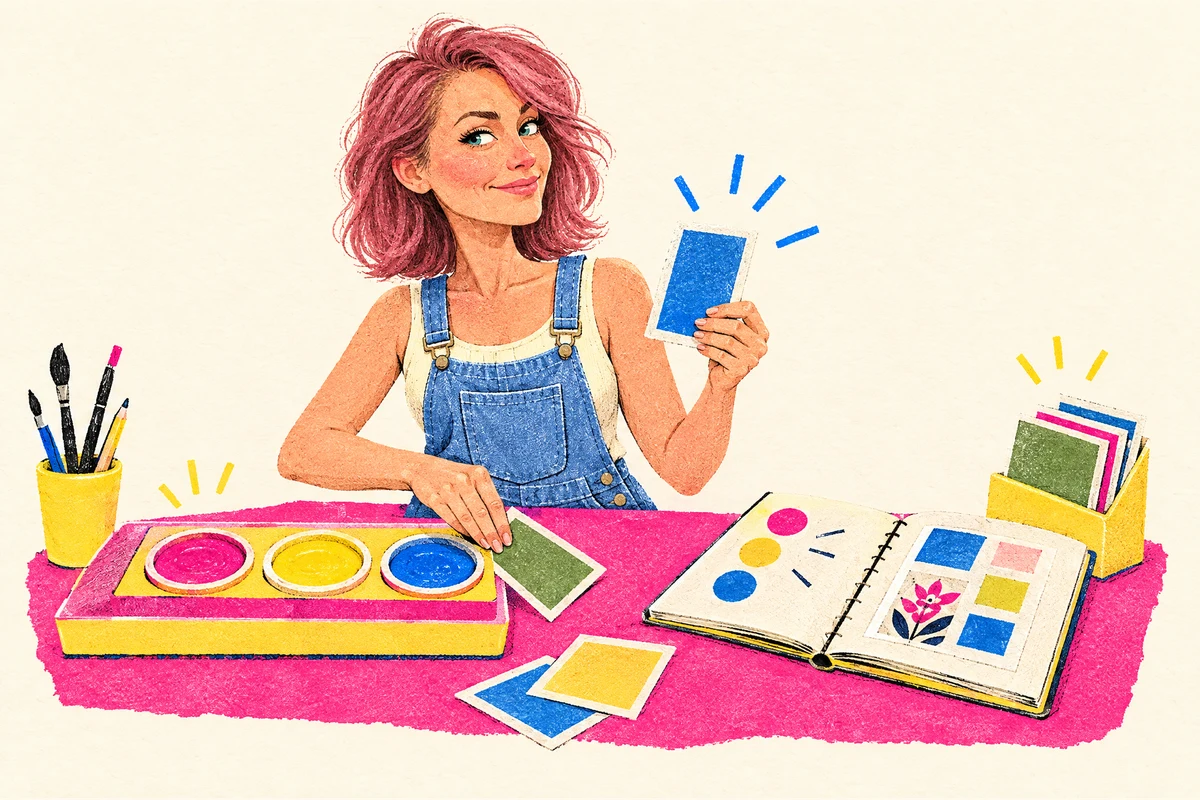
A brand brief should explain decisions, not just collect adjectives. Warm, confident, and authentic are a start; a good example shows what those words mean.
“Make it on brand” is a surprisingly small instruction for everything you mean by it. Give the assistant examples, rules, and evidence instead.
What you’ll work toward: A reusable brand brief and a practical review process for new content.
Before you begin
- Two or three pieces of your own writing you want to repeat, if available. If you have none, the discovery prompt can help choose clearly labeled new defaults.
- Existing colors, type rules, logo files, and visual examples if available.
- One actual content task to use as the first application.
When you reach a copy button, paste the prompt into your AI chat. It will ask for the details it needs, one question at a time.
Gather approved examples
Paste actual writing examples you like into the chat, with a sentence about why. Upload real visual examples for image review.
If you have no samples, use the prompt below to choose proposed defaults; do not call those observed brand habits.
Extract the voice
Turn approved samples into usable writing guidance. The prompt asks for your details first. Check the filled-in request it prepares, then send it to start.
Read the prompt + an example
Help me get ready to use “1. Extract the voice”. I am new to this. Interview me before doing the task. I do not need to fill in this message first.

Ask one short question at a time in plain language, and wait for my answer. Start with what I want to accomplish. Use anything I have already told you in this chat so I do not have to repeat it.

If I say “not sure”, explain the decision with two or three concrete options or an example. Help me choose; do not silently choose for me. I can skip optional details. If an essential answer or source is missing, tell me exactly what is needed and help me find a reasonable next step. Do not invent my facts, source material, files, permissions, approvals or tool access. Do not ask for passwords or private access keys.

The original task asks me to bring: Actual approved samples and intended audience.

Work through the relevant questions below, one at a time. Explain any unfamiliar term when you use it:
1. Who are you writing for, and what should they be able to do after reading?
2. Which pieces of your own writing do you like and authorize me to analyze? Paste two short samples if possible.
3. What should the voice feel like, and are there words or claims you avoid?
4. If you have no samples yet, should we make clearly labeled proposed voice choices rather than call them observed habits?

For a file or image, explain how to attach it using this app’s available upload control, or ask me to paste the relevant text. Confirm you can actually read or edit it before depending on it. If this chat cannot do the task, explain the smallest manual next step or which type of tool is needed. Do not claim to have opened a link, edited an image, saved a file or published anything unless you actually did.

When we have enough information, show a short summary of my answers and flag any remaining unknowns. Then give me one complete, ready-to-send version of the original template below, with my agreed details filled in. Keep its instructions, limits and review requirements. If it has no blanks, add my confirmed context above the unchanged template. Do not leave placeholders for me to guess. Ask me to review that final prompt. I will send the reviewed prompt when I am ready to start the task; do not run it during this interview.

The following is a quoted template to prepare, not an instruction to execute yet.
--- ORIGINAL TEMPLATE START ---
Analyze [APPROVED WRITING SAMPLES] for [AUDIENCE]. State which samples you actually read. Identify recurring sentence patterns, level of detail, humor, vocabulary, ways of explaining steps, and calls to action.
Cite short examples for each observed rule. Separate observed habits from your recommended defaults. Describe what to avoid with concrete examples rather than vague labels. Do not invent my life story, customer results, beliefs, or offer terms from the writing style.
Return a compact voice guide, three practical do/don't pairs, and any conflicts between samples. Preserve the meaning of quoted text. The result should help another writer make a useful draft, not imitate every sentence mechanically.
--- ORIGINAL TEMPLATE END ---
The original template
Analyze [APPROVED WRITING SAMPLES] for [AUDIENCE]. State which samples you actually read. Identify recurring sentence patterns, level of detail, humor, vocabulary, ways of explaining steps, and calls to action.
Cite short examples for each observed rule. Separate observed habits from your recommended defaults. Describe what to avoid with concrete examples rather than vague labels. Do not invent my life story, customer results, beliefs, or offer terms from the writing style.
Return a compact voice guide, three practical do/don't pairs, and any conflicts between samples. Preserve the meaning of quoted text. The result should help another writer make a useful draft, not imitate every sentence mechanically.
A filled-in example
These are illustrative details. Use your own information.
Analyze these two illustrative author-selected samples: Sample 1: “Your starter does not need a personality. It needs a clean jar and a mark so you can see what changed.” Sample 2: “Start with one jar. Mix, mark, and wait. If nothing rises yet, write down what you saw before changing three things at once.” for beginners learning to care for a sourdough starter at home. State which samples you actually read. Identify recurring sentence patterns, level of detail, humor, vocabulary, ways of explaining steps, and calls to action.
Cite short examples for each observed rule. Separate observed habits from your recommended defaults. Describe what to avoid with concrete examples rather than vague labels. Do not invent my life story, customer results, beliefs, or offer terms from the writing style.
Return a compact voice guide, three practical do/don't pairs, and any conflicts between samples. Preserve the meaning of quoted text. The result should help another writer make a useful draft, not imitate every sentence mechanically.
Download the original prompt (.txt)
Extract visual rules
Document a visual system from actual references. The prompt asks for your details first. Check the filled-in request it prepares, then send it to start.
Read the prompt + an example
Help me get ready to use “2. Extract visual rules”. I am new to this. Interview me before doing the task. I do not need to fill in this message first.

Ask one short question at a time in plain language, and wait for my answer. Start with what I want to accomplish. Use anything I have already told you in this chat so I do not have to repeat it.

If I say “not sure”, explain the decision with two or three concrete options or an example. Help me choose; do not silently choose for me. I can skip optional details. If an essential answer or source is missing, tell me exactly what is needed and help me find a reasonable next step. Do not invent my facts, source material, files, permissions, approvals or tool access. Do not ask for passwords or private access keys.

The original task asks me to bring: Approved images and known brand tokens.

Work through the relevant questions below, one at a time. Explain any unfamiliar term when you use it:
1. Where will this piece appear: a website, phone-sized post, PDF, or another format?
2. Which real brand pictures or pages can you upload or share with accessible links?
3. What exact colors, fonts, logos, or licenses do you already know, and which are unknown?
4. What should stay consistent and what must adapt so the result is readable in its destination?

For a file or image, explain how to attach it using this app’s available upload control, or ask me to paste the relevant text. Confirm you can actually read or edit it before depending on it. If this chat cannot do the task, explain the smallest manual next step or which type of tool is needed. Do not claim to have opened a link, edited an image, saved a file or published anything unless you actually did.

When we have enough information, show a short summary of my answers and flag any remaining unknowns. Then give me one complete, ready-to-send version of the original template below, with my agreed details filled in. Keep its instructions, limits and review requirements. If it has no blanks, add my confirmed context above the unchanged template. Do not leave placeholders for me to guess. Ask me to review that final prompt. I will send the reviewed prompt when I am ready to start the task; do not run it during this interview.

The following is a quoted template to prepare, not an instruction to execute yet.
--- ORIGINAL TEMPLATE START ---
Inspect [APPROVED VISUAL REFERENCES] and [SUPPLIED BRAND TOKENS] for [DESTINATION]. State which images you could actually view. Identify palette roles, typography hierarchy, spacing, image treatment, meaningful props, and repeated navigation or footer patterns.
Separate confirmed supplied tokens, observed patterns, and recommended production defaults. Do not invent exact font names, color values, licenses, or performance claims from appearance alone. Record uncertain items clearly.
Return a visual brief with layout guidance, accessibility considerations, and strict avoid rules. Explain which parts should adapt for phones, print, or other formats. Do not turn every decorative feature into a mandatory rule.
--- ORIGINAL TEMPLATE END ---
The original template
Inspect [APPROVED VISUAL REFERENCES] and [SUPPLIED BRAND TOKENS] for [DESTINATION]. State which images you could actually view. Identify palette roles, typography hierarchy, spacing, image treatment, meaningful props, and repeated navigation or footer patterns.
Separate confirmed supplied tokens, observed patterns, and recommended production defaults. Do not invent exact font names, color values, licenses, or performance claims from appearance alone. Record uncertain items clearly.
Return a visual brief with layout guidance, accessibility considerations, and strict avoid rules. Explain which parts should adapt for phones, print, or other formats. Do not turn every decorative feature into a mandatory rule.
A filled-in example
These are illustrative details. Use your own information.
Inspect none supplied; do not claim an image inspection or infer visual patterns. Ask me to upload references if observation is essential and new illustrative production choices for this exercise: cream #fffaf1 for the page, dark ink #171616 for text, mustard #e4b545 as a small accent. No font or image license is confirmed; propose a readable default and label it as a recommendation for a mobile-readable sourdough starter guide page with selectable instructions. State which images you could actually view. Identify palette roles, typography hierarchy, spacing, image treatment, meaningful props, and repeated navigation or footer patterns.
Separate confirmed supplied tokens, observed patterns, and recommended production defaults. Do not invent exact font names, color values, licenses, or performance claims from appearance alone. Record uncertain items clearly.
Return a visual brief with layout guidance, accessibility considerations, and strict avoid rules. Explain which parts should adapt for phones, print, or other formats. Do not turn every decorative feature into a mandatory rule.
Download the original prompt (.txt)
Before you move on: The assistant can access the examples, not just their filenames.
Extract and confirm the rules
Use Prompt 1 for writing. Use Prompt 2 only if you need a visual brief, supplying actual images and any known colors or fonts.
Read the proposed rules, correct them, and tell the assistant which you accept before using Prompt 3.
Brief one new piece
Connect brand guidance to the reader’s task. The prompt asks for your details first. Check the filled-in request it prepares, then send it to start.
Read the prompt + an example
Help me get ready to use “3. Brief one new piece”. I am new to this. Interview me before doing the task. I do not need to fill in this message first.

Ask one short question at a time in plain language, and wait for my answer. Start with what I want to accomplish. Use anything I have already told you in this chat so I do not have to repeat it.

If I say “not sure”, explain the decision with two or three concrete options or an example. Help me choose; do not silently choose for me. I can skip optional details. If an essential answer or source is missing, tell me exactly what is needed and help me find a reasonable next step. Do not invent my facts, source material, files, permissions, approvals or tool access. Do not ask for passwords or private access keys.

The original task asks me to bring: Brand brief, factual sources, destination, objective.

Work through the relevant questions below, one at a time. Explain any unfamiliar term when you use it:
1. Which accepted voice and visual rules should this piece follow?
2. What one piece are we making, for whom, and where will they see it?
3. What single next action should the reader take?
4. What source facts, offer terms, or original prompts can I use, and what remains unknown?

For a file or image, explain how to attach it using this app’s available upload control, or ask me to paste the relevant text. Confirm you can actually read or edit it before depending on it. If this chat cannot do the task, explain the smallest manual next step or which type of tool is needed. Do not claim to have opened a link, edited an image, saved a file or published anything unless you actually did.

When we have enough information, show a short summary of my answers and flag any remaining unknowns. Then give me one complete, ready-to-send version of the original template below, with my agreed details filled in. Keep its instructions, limits and review requirements. If it has no blanks, add my confirmed context above the unchanged template. Do not leave placeholders for me to guess. Ask me to review that final prompt. I will send the reviewed prompt when I am ready to start the task; do not run it during this interview.

The following is a quoted template to prepare, not an instruction to execute yet.
--- ORIGINAL TEMPLATE START ---
Use [BRAND BRIEF] to plan [PIECE] for [READER] at [DESTINATION]. Intended action: [ACTION]. Factual sources: [SOURCES].
Write the one-sentence promise, the reader's starting situation, the useful outcome, the shortest practical path, and a restrained visual plan. Identify which brand rules matter here and which should adapt to the format. Keep essential instructions readable and selectable.
Flag missing facts that would materially change the promise. Use illustrative placeholders only when labeled. Return a concise production brief with acceptance checks; do not create unsupported results, testimonials, deadlines, prices, or product capabilities to fill the gaps.
--- ORIGINAL TEMPLATE END ---
The original template
Use [BRAND BRIEF] to plan [PIECE] for [READER] at [DESTINATION]. Intended action: [ACTION]. Factual sources: [SOURCES].
Write the one-sentence promise, the reader's starting situation, the useful outcome, the shortest practical path, and a restrained visual plan. Identify which brand rules matter here and which should adapt to the format. Keep essential instructions readable and selectable.
Flag missing facts that would materially change the promise. Use illustrative placeholders only when labeled. Return a concise production brief with acceptance checks; do not create unsupported results, testimonials, deadlines, prices, or product capabilities to fill the gaps.
A filled-in example
These are illustrative details. Use your own information.
Use plain, warm, practical writing; short connected instructions; light humor about the situation; no guarantees or invented personal stories. Proposed visual choices: cream background, dark text, small mustard accents, readable selectable text to plan a short introduction to a free sourdough starter observation worksheet for a first-time starter keeper who is unsure whether anything is happening at the top of a mobile-readable guide page. Intended action: download the blank observation worksheet and record one observation today. Factual sources: inline worksheet description: fields for date, feeding note, level before waiting, level after waiting, and what I saw. No actual worksheet file or download URL is supplied yet; flag those as required before publication.
Write the one-sentence promise, the reader's starting situation, the useful outcome, the shortest practical path, and a restrained visual plan. Identify which brand rules matter here and which should adapt to the format. Keep essential instructions readable and selectable.
Flag missing facts that would materially change the promise. Use illustrative placeholders only when labeled. Return a concise production brief with acceptance checks; do not create unsupported results, testimonials, deadlines, prices, or product capabilities to fill the gaps.
Download the original prompt (.txt)
Before you move on: No invented brand history, logo permission, or proven performance claims.
Apply the brief to one task
Paste your accepted brand rules and actual source facts into Prompt 3. Review the resulting plan, then send Prompt 4 in the same chat with that plan.
A creative brief is the short plan for this one piece. If starting a new chat, paste the saved rules and plan again.
Draft in the saved voice
Create useful copy with the brand as a constraint. The prompt asks for your details first. Check the filled-in request it prepares, then send it to start.
Read the prompt + an example
Help me get ready to use “4. Draft in the saved voice”. I am new to this. Interview me before doing the task. I do not need to fill in this message first.

Ask one short question at a time in plain language, and wait for my answer. Start with what I want to accomplish. Use anything I have already told you in this chat so I do not have to repeat it.

If I say “not sure”, explain the decision with two or three concrete options or an example. Help me choose; do not silently choose for me. I can skip optional details. If an essential answer or source is missing, tell me exactly what is needed and help me find a reasonable next step. Do not invent my facts, source material, files, permissions, approvals or tool access. Do not ask for passwords or private access keys.

The original task asks me to bring: Approved brief, voice rules, actual factual sources.

Work through the relevant questions below, one at a time. Explain any unfamiliar term when you use it:
1. What format and length do you need?
2. What creative brief and voice rules have you accepted?
3. What real source information, original prompts, or offer details should be preserved?
4. Which examples should be labeled illustrative, and what still needs a decision before sharing?

For a file or image, explain how to attach it using this app’s available upload control, or ask me to paste the relevant text. Confirm you can actually read or edit it before depending on it. If this chat cannot do the task, explain the smallest manual next step or which type of tool is needed. Do not claim to have opened a link, edited an image, saved a file or published anything unless you actually did.

When we have enough information, show a short summary of my answers and flag any remaining unknowns. Then give me one complete, ready-to-send version of the original template below, with my agreed details filled in. Keep its instructions, limits and review requirements. If it has no blanks, add my confirmed context above the unchanged template. Do not leave placeholders for me to guess. Ask me to review that final prompt. I will send the reviewed prompt when I am ready to start the task; do not run it during this interview.

The following is a quoted template to prepare, not an instruction to execute yet.
--- ORIGINAL TEMPLATE START ---
Write [FORMAT] using [APPROVED CREATIVE BRIEF], [VOICE RULES], and [FACTUAL SOURCES]. Lead with a concrete problem and useful outcome. Use plain language, connected steps, and humor about the situation when it helps.
Preserve supplied facts and exact source prompts. Label newly written examples as illustrative. Do not write first-person experiences I did not supply. Avoid generic motivation, corporate phrases, income promises, or implied autonomous results.
Make the draft complete enough for its intended reader and format. Explain what to do next and how to recognize a good result. Return the actual draft, followed by a short list of any missing evidence or decisions that affect publication.
--- ORIGINAL TEMPLATE END ---
The original template
Write [FORMAT] using [APPROVED CREATIVE BRIEF], [VOICE RULES], and [FACTUAL SOURCES]. Lead with a concrete problem and useful outcome. Use plain language, connected steps, and humor about the situation when it helps.
Preserve supplied facts and exact source prompts. Label newly written examples as illustrative. Do not write first-person experiences I did not supply. Avoid generic motivation, corporate phrases, income promises, or implied autonomous results.
Make the draft complete enough for its intended reader and format. Explain what to do next and how to recognize a good result. Return the actual draft, followed by a short list of any missing evidence or decisions that affect publication.
A filled-in example
These are illustrative details. Use your own information.
Write a 120-word guide introduction with a short numbered starting path using write for a first-time sourdough starter keeper; explain a blank observation worksheet; lead to recording one observation today. Treat this as my selected exercise brief, not a previously tested product, plain, warm, practical; light situation humor; no invented first-person experience, guarantees, income claims, or automatic success, and the proposed worksheet has date, feeding note, level before waiting, level after waiting, and what I saw fields. No worksheet file or download link is supplied; mark the missing file/link as a publication blocker instead of inventing a URL. Lead with a concrete problem and useful outcome. Use plain language, connected steps, and humor about the situation when it helps.
Preserve supplied facts and exact source prompts. Label newly written examples as illustrative. Do not write first-person experiences I did not supply. Avoid generic motivation, corporate phrases, income promises, or implied autonomous results.
Make the draft complete enough for its intended reader and format. Explain what to do next and how to recognize a good result. Return the actual draft, followed by a short list of any missing evidence or decisions that affect publication.
Download the original prompt (.txt)
Before you move on: It meets the task as well as the brand rules.
Review and save improvements
Supply the actual draft for Prompt 5. Review the proposed corrections yourself; then use Prompt 6 with your explicit decisions, not the assistant’s assumptions.
Copy the current rules into your brand-notes document and reopen the saved version.
Review brand fit
Find specific drift without sacrificing usefulness. The prompt asks for your details first. Check the filled-in request it prepares, then send it to start.
Read the prompt + an example
Help me get ready to use “5. Review brand fit”. I am new to this. Interview me before doing the task. I do not need to fill in this message first.

Ask one short question at a time in plain language, and wait for my answer. Start with what I want to accomplish. Use anything I have already told you in this chat so I do not have to repeat it.

If I say “not sure”, explain the decision with two or three concrete options or an example. Help me choose; do not silently choose for me. I can skip optional details. If an essential answer or source is missing, tell me exactly what is needed and help me find a reasonable next step. Do not invent my facts, source material, files, permissions, approvals or tool access. Do not ask for passwords or private access keys.

The original task asks me to bring: Actual draft and current brand brief.

Work through the relevant questions below, one at a time. Explain any unfamiliar term when you use it:
1. What exact draft or design needs review? Paste text or upload images.
2. What current brand rules and reader task should I use?
3. Which parts are confirmed facts, and which are proposed choices?
4. Can I inspect the actual visual layout, or should this stay a copy review?

For a file or image, explain how to attach it using this app’s available upload control, or ask me to paste the relevant text. Confirm you can actually read or edit it before depending on it. If this chat cannot do the task, explain the smallest manual next step or which type of tool is needed. Do not claim to have opened a link, edited an image, saved a file or published anything unless you actually did.

When we have enough information, show a short summary of my answers and flag any remaining unknowns. Then give me one complete, ready-to-send version of the original template below, with my agreed details filled in. Keep its instructions, limits and review requirements. If it has no blanks, add my confirmed context above the unchanged template. Do not leave placeholders for me to guess. Ask me to review that final prompt. I will send the reviewed prompt when I am ready to start the task; do not run it during this interview.

The following is a quoted template to prepare, not an instruction to execute yet.
--- ORIGINAL TEMPLATE START ---
Review [DRAFT OR DESIGN] against [CURRENT BRAND BRIEF] and its intended reader task. Check voice, specificity, factual grounding, hierarchy, readability, and relevant visual rules. Cite exact passages or visible details for findings.
Separate brand drift from a useful format adaptation. Do not reject a clear instruction merely because it is less decorative. Mark visual checks NOT RUN if you cannot inspect actual images or layout.
Return the three most important corrections and a revised version of only the affected parts. Preserve approved facts and the original task. Explain which rule each correction follows. Do not call the piece high-performing without actual performance evidence.
--- ORIGINAL TEMPLATE END ---
The original template
Review [DRAFT OR DESIGN] against [CURRENT BRAND BRIEF] and its intended reader task. Check voice, specificity, factual grounding, hierarchy, readability, and relevant visual rules. Cite exact passages or visible details for findings.
Separate brand drift from a useful format adaptation. Do not reject a clear instruction merely because it is less decorative. Mark visual checks NOT RUN if you cannot inspect actual images or layout.
Return the three most important corrections and a revised version of only the affected parts. Preserve approved facts and the original task. Explain which rule each correction follows. Do not call the piece high-performing without actual performance evidence.
A filled-in example
These are illustrative details. Use your own information.
Review this sample copy: “Unlock your baking potential with our revolutionary starter system. Guaranteed results in days. Download the ultimate transformation now.” Only text is supplied; no layout is available against reader: a first-time sourdough starter keeper. Task: understand a blank observation worksheet and record one observation. Voice: plain, warm, practical with light situation humor. Avoid guarantees, generic motivation, and unsupported claims. Confirmed worksheet fields: date, feeding note, level before waiting, level after waiting, and what I saw. No file or download URL is available yet and its intended reader task. Check voice, specificity, factual grounding, hierarchy, readability, and relevant visual rules. Cite exact passages or visible details for findings.
Separate brand drift from a useful format adaptation. Do not reject a clear instruction merely because it is less decorative. Mark visual checks NOT RUN if you cannot inspect actual images or layout.
Return the three most important corrections and a revised version of only the affected parts. Preserve approved facts and the original task. Explain which rule each correction follows. Do not call the piece high-performing without actual performance evidence.
Download the original prompt (.txt)
Save the decisions
Keep the next session from reinventing the brand. The prompt asks for your details first. Check the filled-in request it prepares, then send it to start.
Read the prompt + an example
Help me get ready to use “6. Save the decisions”. I am new to this. Interview me before doing the task. I do not need to fill in this message first.

Ask one short question at a time in plain language, and wait for my answer. Start with what I want to accomplish. Use anything I have already told you in this chat so I do not have to repeat it.

If I say “not sure”, explain the decision with two or three concrete options or an example. Help me choose; do not silently choose for me. I can skip optional details. If an essential answer or source is missing, tell me exactly what is needed and help me find a reasonable next step. Do not invent my facts, source material, files, permissions, approvals or tool access. Do not ask for passwords or private access keys.

The original task asks me to bring: Approved changes, current brief, source locations.

Work through the relevant questions below, one at a time. Explain any unfamiliar term when you use it:
1. What is the current saved brand note?
2. What exact new decisions have you personally made, and which are still experiments?
3. What source or reason supports each decision, and where should it apply?
4. Where may the updated note be saved, and can this assistant access that destination?

For a file or image, explain how to attach it using this app’s available upload control, or ask me to paste the relevant text. Confirm you can actually read or edit it before depending on it. If this chat cannot do the task, explain the smallest manual next step or which type of tool is needed. Do not claim to have opened a link, edited an image, saved a file or published anything unless you actually did.

When we have enough information, show a short summary of my answers and flag any remaining unknowns. Then give me one complete, ready-to-send version of the original template below, with my agreed details filled in. Keep its instructions, limits and review requirements. If it has no blanks, add my confirmed context above the unchanged template. Do not leave placeholders for me to guess. Ask me to review that final prompt. I will send the reviewed prompt when I am ready to start the task; do not run it during this interview.

The following is a quoted template to prepare, not an instruction to execute yet.
--- ORIGINAL TEMPLATE START ---
Update [CURRENT BRAND BRIEF] with these explicit decisions: [APPROVED DECISIONS]. Preserve existing rules unless the new decision replaces them. Record what changed, why, its source, and where it applies.
Keep confirmed rules, experimental ideas, and measured performance separate. Do not treat my liking a design as evidence that it improved conversion. Do not record approval I did not give.
Return a concise reusable brief plus an update note. Save to [AUTHORIZED DESTINATION] only if supported, and report the actual saved location. Keep private references and credentials out of public exports. Identify unresolved contradictions rather than quietly choosing a new brand direction.
--- ORIGINAL TEMPLATE END ---
The original template
Update [CURRENT BRAND BRIEF] with these explicit decisions: [APPROVED DECISIONS]. Preserve existing rules unless the new decision replaces them. Record what changed, why, its source, and where it applies.
Keep confirmed rules, experimental ideas, and measured performance separate. Do not treat my liking a design as evidence that it improved conversion. Do not record approval I did not give.
Return a concise reusable brief plus an update note. Save to [AUTHORIZED DESTINATION] only if supported, and report the actual saved location. Keep private references and credentials out of public exports. Identify unresolved contradictions rather than quietly choosing a new brand direction.
A filled-in example
These are illustrative details. Use your own information.
If file creation is supported, offer brand-notes.txt as an actual download in this chat. Otherwise return the complete reusable text here, say that no file was created, and I will copy it into my private brand-notes document. No external service access is authorized.

Update illustrative current note: plain, practical writing for beginner starter keepers; cream background, dark text, small mustard accents are proposed production choices; no performance evidence supplied with these explicit decisions: for this sample exercise, I now choose these writing rules: explain unfamiliar terms on first use; use humor about the waiting jar rather than the beginner; use “Record one observation” as the worksheet’s main action. These are my explicit choices for this exercise, not measured audience results. Preserve existing rules unless the new decision replaces them. Record what changed, why, its source, and where it applies.
Keep confirmed rules, experimental ideas, and measured performance separate. Do not treat my liking a design as evidence that it improved conversion. Do not record approval I did not give.
Return a concise reusable brief plus an update note. Save to this chat’s file area only if supported, and report the actual saved location. Keep private references and credentials out of public exports. Identify unresolved contradictions rather than quietly choosing a new brand direction.
Download the original prompt (.txt)
Before you move on: Changes are traceable to references or an explicit new decision.
Check it. Save the useful version.
Open the actual result and use it as the reader would.
Create one document named brand-notes. Copy confirmed rules, source samples or private source locations, and the date of your decisions into it. Copy each useful draft to a separate document. If the assistant cannot save externally, do this yourself and reopen the saved document.
If you get stuck
The voice guide is all adjectives.
Ask for sample passages and do/don’t pairs.
Every design becomes identical.
Separate stable palette/type rules from compositions that can vary.
The assistant invents a personal story.
Remove it and require supplied facts for first-person experience.
Keep the useful bits.
Download all prompts and examples (.txt)Download the complete written guide (.md)The full example, sources + extra notes
Illustrative example: a guide that sounds like its creator
A warm practical business keeps getting drafts that begin “In today’s fast-paced digital landscape.”
- Provide two approved samples with concrete, situation-based openings.
- Extract the rule: lead with the reader’s specific stuck moment and a useful next step.
- Draft the guide opening, then review it against the sample evidence and intended reader task.
Expected result: a specific, recognizable introduction and a reusable voice rule.
These are original, provider-independent prompt templates based on our documented production practices. Examples are illustrative. Tool access, output quality, and available file actions depend on your assistant and account.
Editorially reviewed prompt library. No end-to-end execution of these newly written prompts or the illustrative example was performed for this library. Test the actual outputs in your environment before using them.
Keep observed rules separate from proposed defaults. A pink image in one post does not establish that every future page must be pink.
- Unstuck Guide Studio production method
SOURCE: existing project method. The portable prompts below are newly written RECOMMENDED ADDITIONS, not quotations from a tool provider.
The illustrations explain the process; they are not screenshots of completed work.
WHEN YOU WANT HELP WITH THE NEXT STEP
Want to turn your know-how into something people can buy?
Make your first small digital product and launch it with Molly, one step a day.
December 1–14. Daily videos, three office hours, a private group, and feedback from Molly.
Join the waitlistDoors open Nov 24 for one week. The waitlist gets $47 for the first 48 hours (then $97), and keeps 40+ of my AI agents after the challenge.