
Aspiration Doesn't Ship
Vision is the easy part. The reason your project hasn't shipped is the system you didn't build underneath it.
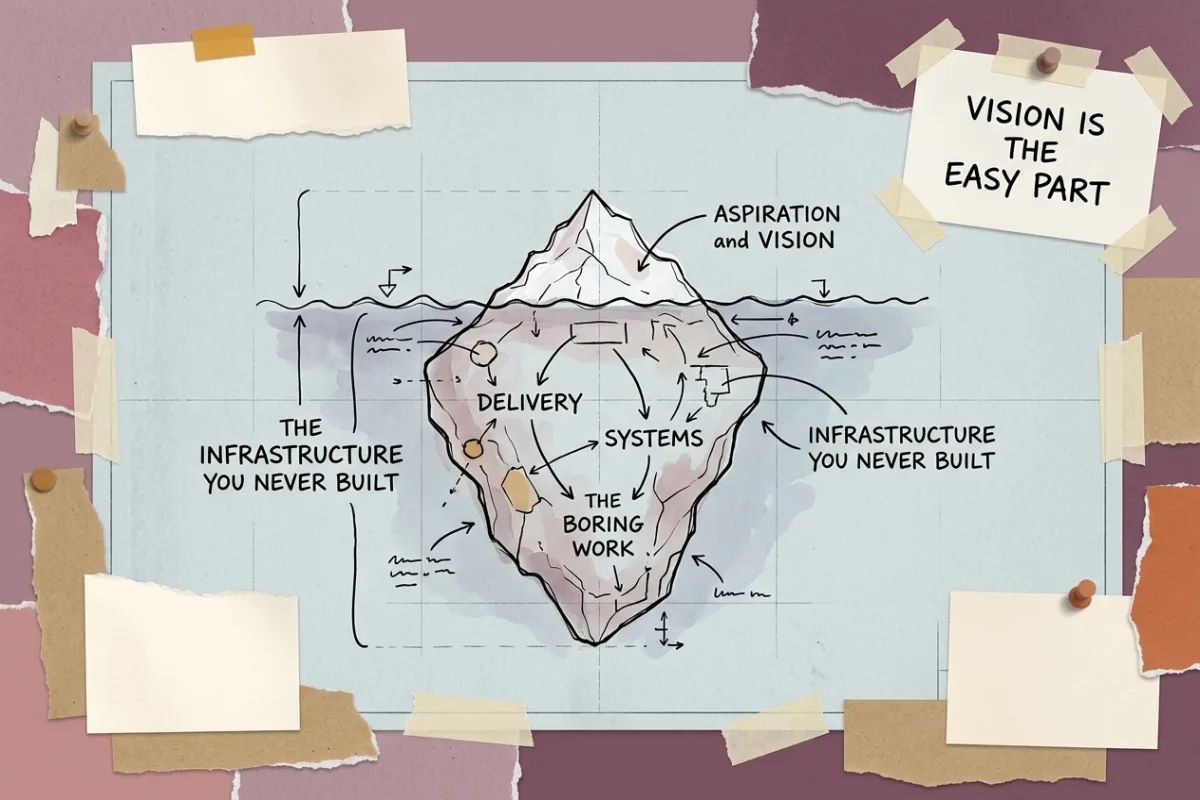
You don't have an aspiration shortage. You have an aspiration surplus, with no system to carry it. The reason your project isn't shipping is the part of the work that's invisible from your couch on Sunday night.
Aspiration Doesn't Ship
Vision is the easy part. The reason your project hasn't shipped is the system you didn't build underneath it.
You have enough vision.
You don't need a 5am routine. You don't need a vision board. You don't need to manifest harder. You don't need to read another book about deciding what you really want, because you already decided. You decided in 2022. You decided again in 2024. You're deciding right now, on a Sunday night, with the laptop open and the project still not shipped.
The cult of "think bigger" has gotten this wrong for twenty years. The bottleneck for senior tech leaders trying to ship side projects has not been ambition for a long time. The bottleneck is the part of the work that doesn't feel like work. The boring, structural, calendar-shaped, written-down, agreed-on-with-other-people layer underneath the vision.
Aspiration is weight. Infrastructure is support.
Most senior operators have been pouring more weight onto a structure that's been crumbling since 2021, and wondering why the project list keeps getting longer.
What Pixar built underneath the movies
In 2014 Ed Catmull, the co-founder and longtime president of Pixar, published a book called Creativity, Inc. The book is the closest thing the studio ever produced to an operating manual. It is also the most useful book on creative organizations written in the last twenty years.
The most quoted chapter is the one on what Pixar calls the Braintrust.
The Braintrust is a small group of senior creative people — directors, story leads, technical leads — who watch every Pixar movie at multiple stages of production and tell the director what's broken. The meetings happen on a regular cadence. There's no agenda. There's no formal escalation. The director presents the cut. The Braintrust gives notes. The director chooses what to do with them.
The structural detail that Catmull keeps coming back to is the rule that defines the meeting.
The Braintrust has no authority. It cannot order changes. The director can ignore every note. The notes are not commands. They are observations.
This sounds like a small thing. It's the entire point. The reason the Braintrust works is that it removes the political cost of disagreement. Anyone in the room can say "this scene is dead" without the director having to defend the scene to a boss. The honesty becomes possible because nothing happens automatically. The honesty is the asset.
Pixar's record at the time of the book — fourteen consecutive critically successful films, no flops — wasn't built on more aspiration than every other animation studio. Every animation studio aspired. Pixar's record was built on the Braintrust, the dailies, the editorial process, and a half-dozen other infrastructure pieces that institutionalized criticism.
The infrastructure produced the films. The vision was the cheapest input.
What Tim Cook actually did at Apple
Steve Jobs got the magazine covers. Tim Cook built the company.
Adam Lashinsky's 2012 book Inside Apple lays out, in detail, what Cook actually did when he joined Apple as head of operations in 1998. Apple at the time was famous for design and infamous for shipping. Inventories were bloated. Suppliers were chaotic. The company was 90 days from bankruptcy.
Cook spent his first two years on infrastructure. He cut the inventory cycle from months to days. He restructured the supply chain so that Apple could promise a launch date and actually hit it. He built the operational layer that meant a Steve Jobs keynote could finish on a Tuesday and the product could be in stores on the following Friday.
Walter Isaacson, in the 2011 Jobs biography, captures the dynamic precisely. Jobs would set the impossible vision. Cook would build the system that delivered the impossible vision. Without Cook's infrastructure, the iPod would have shipped late, the iPhone wouldn't have launched globally on schedule, and the iPad would have been a delayed-by-eight-months disappointment.
Apple's record from 2001 to 2011 is the most-celebrated product run in tech history. The vision was set by one person. The infrastructure that delivered the vision was built by the other one. The vision was the easy part.
You are running the Steve Jobs role on your own side project. You also need to run the Tim Cook role. There is no Tim Cook waiting in the wings. There is just you, on a Sunday night, with no operational layer underneath the aspiration.
That's the gap.

What Peter Senge documented in 1990
In 1990 Peter Senge, an MIT systems scientist, published The Fifth Discipline: The Art and Practice of the Learning Organization. The book has sold over a million copies and started the modern systems-thinking movement in business.
Senge's central argument is that organizations fail not because their goals are wrong but because the systems they have are perfectly designed to produce the results they're producing.
If your team can't ship, the system is producing not-shipping. If your project keeps stalling at week three, the system is producing week-three-stalls. If your strategy keeps being misinterpreted, the system is producing misinterpretation. The output is exactly what the system is built for.
Senge's claim, drawn from twenty years of MIT research, is that the only durable change comes from changing the system. Goals don't change behavior. Vision statements don't change behavior. Off-sites don't change behavior. The structure of the system does, because the structure is what produces the behavior in the first place.
This is the part that lands hardest for senior operators. You can set a bigger goal next quarter. You can run a more inspirational off-site. You can set a personal commitment with three friends. None of it will produce a different result, because the system underneath has not changed, and the system is what's producing the current result.
If you want a different output, the system has to change first. That's structural. That's not motivational.
What an actual delivery infrastructure looks like
You don't need a hundred-person ops team. You need three things, on your project, this week.
1. A written scope document, with a date. Not a vision. Not a "we'll figure it out." A two-page document that says exactly what V1 contains, exactly what it doesn't, and the date it ships. Print it. Stick it on the wall. The document is the substrate every other system rests on. Without it, all the other infrastructure has nothing to attach to.
2. A weekly review you actually attend. 30 minutes. Same time every week. Phone off. No exceptions. Three questions. What got done. What didn't. What's blocking. The review is the equivalent of the Pixar Braintrust applied to a one-person operation. The honesty is the asset. Most senior operators skip this because it feels like overhead. The skipping is what kills the project.
3. A second voice in the room. A peer, an old colleague, or a Build Partner. Someone who reads your scope, attends your review (or its async equivalent), and has the standing to tell you the scene is dead. Without the second voice, every system collapses to your own preferences. With the second voice, the system survives your worst Tuesday.
If you can install those three by Friday, the infrastructure layer is functional. The vision can rest on it. The aspiration becomes a tool again, instead of a weight.

The reframe
You don't have an aspiration shortage.
You have an aspiration surplus, with no infrastructure underneath it, and the surplus has been quietly costing you nine consecutive Sundays of guilt and four consecutive quarters of "next quarter for sure."
You don't need to want it more. You need to build the system that lets the wanting actually produce a thing.
Pixar built the Braintrust. Apple built operations. Senge spent forty years proving that the system always wins.
You can spend another year on aspiration, or you can spend a Saturday on infrastructure.
One of them ships things. The other one keeps you up on Sunday.

More for The Overcommitter
 8 min read
The Infrastructure Mismatch
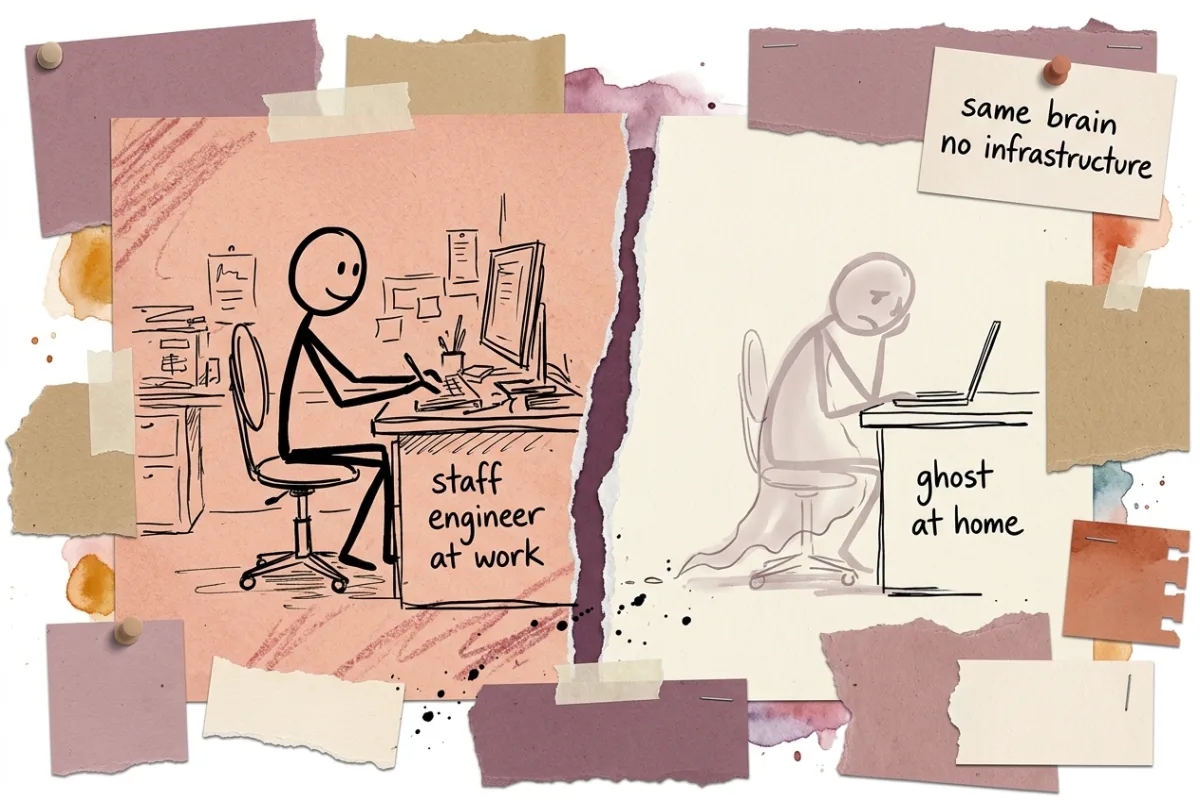
Why You're a Staff Engineer at Work and a Ghost at Home
 8 min read
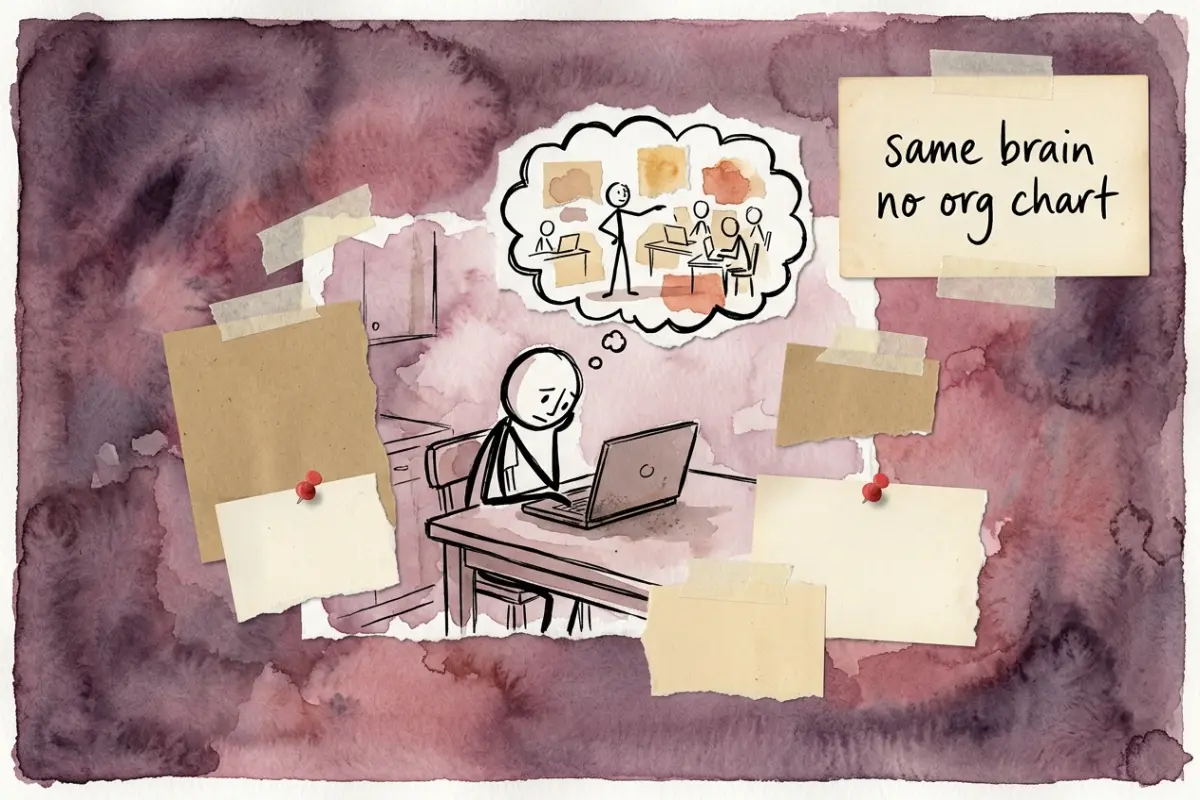
You Don't Need a Fractional CTO
What senior tech leaders actually need is a build partner, not another hire.
 7 min read
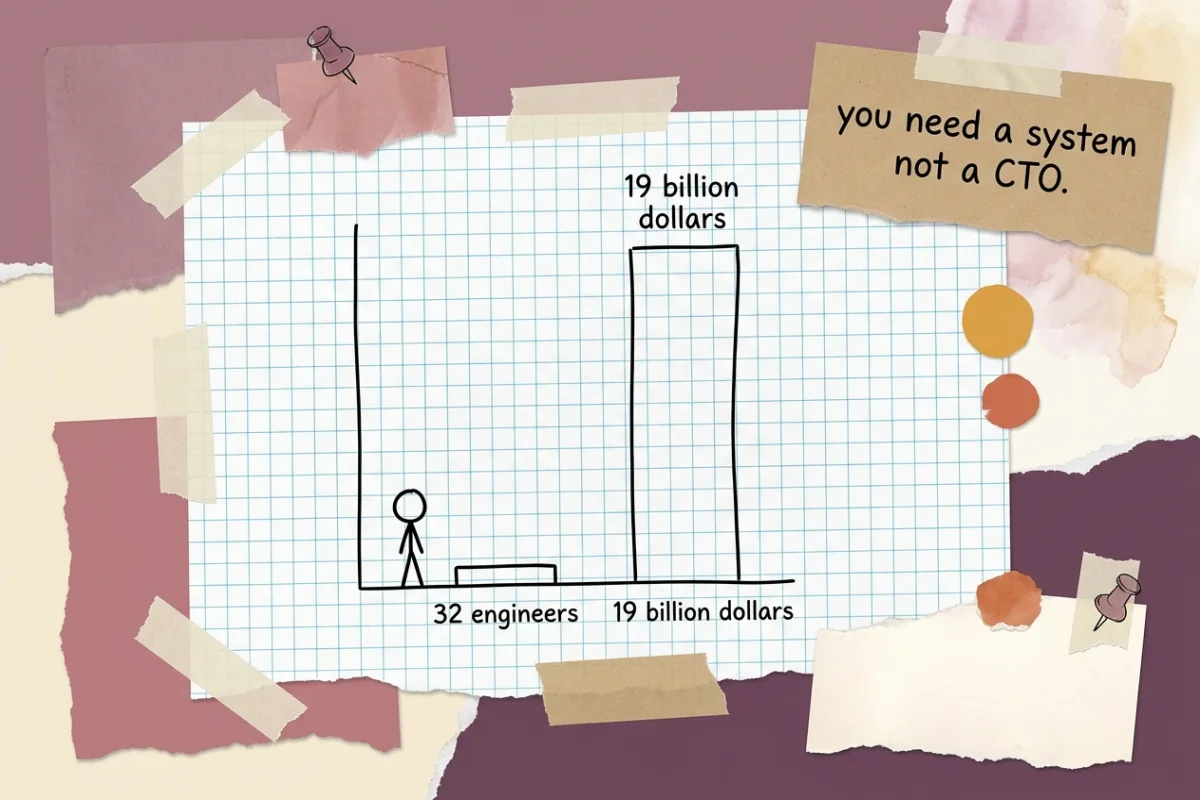
Stop Hiring Your Way Out of a Systems Problem
Most early-stage founders are trying to hire their way out of a systems problem.
Get one email a week.
A 5-minute read on shipping faster, thinking clearer, and actually finishing what you start. Free.
One a week, give or take. Unsubscribe in one click.
Ready to actually ship?
Reading these essays is the warm-up. Book a free Build Partner call and let's get your project moving.
Request a Free Build Partner Call