
01.The Cost of Waiting
Why Your "Someday" Is Bleeding You Dry
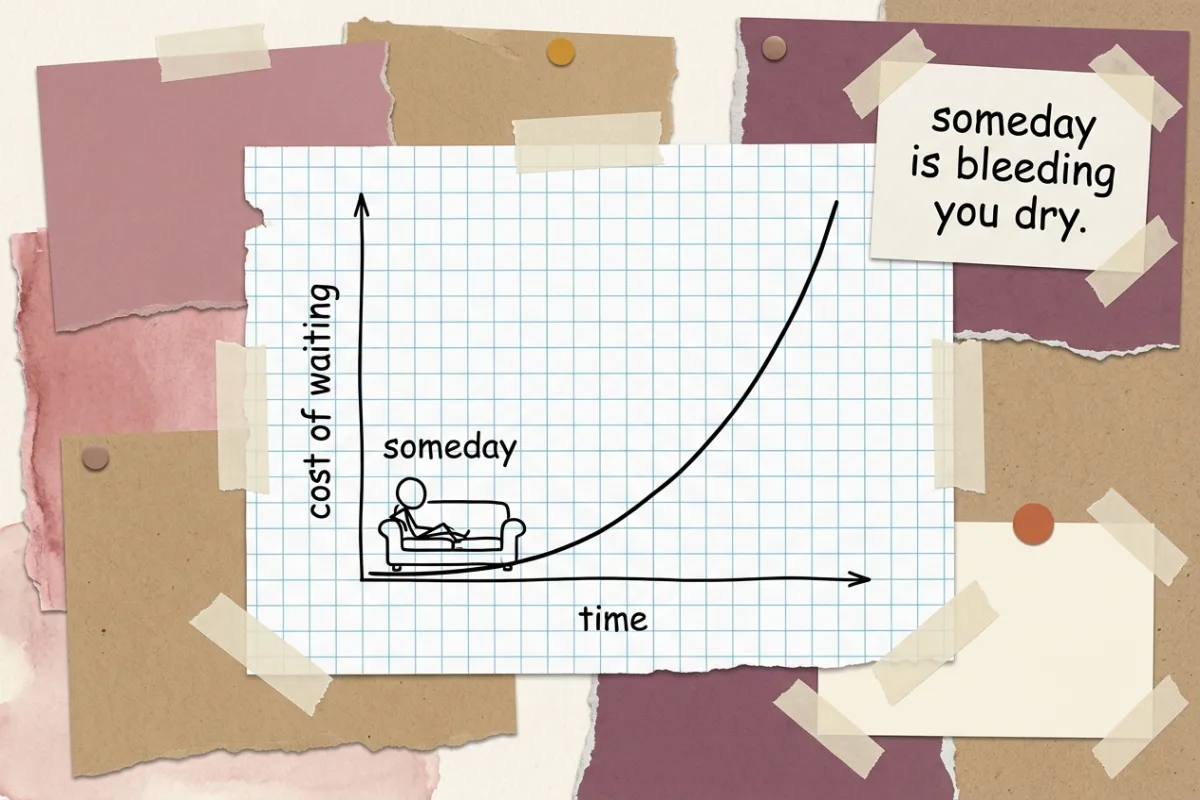
76% of regrets are things we didn't do. Here's the real math behind waiting, and what dying people actually regret.
Look, I'm going to be honest with you.
If you clicked on this because you're hoping I'll give you permission to keep researching, planning, and "getting ready" for another six months?
Wrong document. Close it now. Go binge Netflix. At least that's honest procrastination.
But if you're tired of the Sunday Scaries, the 3am ceiling-staring sessions, and the endless loop of "What if I just..." followed by absolutely nothing?
Pull up a chair. We need to talk about the math.
Because here's what nobody tells you about waiting: it's not free. It's not even neutral.
Waiting is actively expensive. And you're paying the bill every single day you don't make the move.
The Number That Should Keep You Up at Night
The average person will spend 90,000 hours at work over their lifetime. That's roughly one-third of your waking life, spent doing... whatever it is you do from 9-to-5. (Or let's be real, 8-to-7 with "just checking email" at 10pm.)
Here's what the data says: 50% of American workers dislike their jobs. Half. Every other person you pass on the street. And 70% are either "not engaged" or "actively disengaged"—showing up but checked out, or worse, actively sabotaging.
90,000 hours × 50% dissatisfaction = 45,000 hours of quiet desperation
Let me translate that into English: Half of humanity is spending a third of their life doing something they actively dislike—and most of them will do absolutely nothing about it.
Why? Because waiting feels safer than moving.
Spoiler alert: It's not.
What Dying People Actually Regret
In 2018, psychologists Shai Davidai and Tom Gilovich published a study that I think about approximately once a day. They wanted to know: What do people regret most?
The finding? 76% of people's biggest regrets are things they didn't do.
Not mistakes they made. Not risks that backfired. The things that haunt people most are the actions they never took.
When you take action and it goes wrong, you can learn from it. You analyze what happened. You adjust. You move on. The regret fades because there's a feedback loop.
When you don't act? There's nothing to learn from. No data. No feedback. Just the endless, echoing question: What if I had tried?
That question doesn't get quieter with time. It gets louder.
Bronnie Ware spent eight years as a palliative care worker, caring for people in the final weeks of their lives. The #1 most common regret?
"I wish I'd had the courage to live a life true to myself, not the life others expected of me."
Not making a choice IS making a choice. You're just choosing the status quo. And pretending you didn't.
The things that haunt us most are not the risks we took that didn't work out—they're the risks we never took at all.
The People Who Stopped Waiting
Jeff Bezos created what he called a "regret minimization framework." He wanted to project himself forward to age 80 and minimize the number of regrets he'd have.
"I knew that when I was 80, I was not going to regret having tried this. I knew the one thing I might regret is not trying."
The point isn't "be like Bezos." The point is: he asked the right question.
Not "What if this fails?" But "What will I regret more when I'm 80: trying and failing, or never trying at all?"
The answer is almost always the same.
Colonel Sanders was 62 years old when he started franchising Kentucky Fried Chicken. He was rejected 1,009 times. One thousand and nine rejections. At 62. When most people are planning retirement.
What's your excuse again?
You're Probably Not Too Old
Here's a fact that might break your brain if you've spent any time on LinkedIn watching 23-year-olds talk about their "entrepreneurial journey":
The average age of the most successful startup founders is 45.
Not 25. Not 30. Forty-five.
This comes from a massive Harvard Business Review study that analyzed 2.7 million business founders. A 50-year-old founder is 1.8x more likely to build a top-growth firm than a 30-year-old.
A 50-year-old founder is 1.8x more likely to build a top-growth firm than a 30-year-old.
Why? Because experience actually matters. Industry knowledge actually matters. Networks actually matters. Financial resources actually matter.
All those years you think you've "wasted"? They're actually your competitive advantage.
You're Not Lazy. You're Paralyzed.
Waiting isn't a moral failure. It's a psychological trap.
Psychologist Barry Schwartz wrote a whole book about it called The Paradox of Choice. When faced with too many options, people don't make better decisions. They make no decisions. The brain literally short-circuits.
And here's the cruelest irony: The more capable you are, the worse this gets.
Why? Because smart people see more possibilities. They understand more complexity. They can hold more options in their head—which means there's always one more thing to consider, one more angle to research, one more reason to wait.
Sound familiar?
You're not stuck because you're incompetent. You're stuck because you're competent enough to see all the ways things could go wrong.
The Actual Cost of Waiting
Let's make this concrete.
Say you're thinking about a career change that would increase your income by $30,000/year. And say you wait 3 years to make it happen.
Direct income loss: $90,000
But that's not all. Add:
- 3 years of experience you didn't gain
- 3 years of network you didn't build
- 3 years of skills you didn't develop
- 3 years of reputation you didn't establish
- 3 years of Sunday Scaries and the slow erosion of believing you're the kind of person who actually does things
Conservative total cost: $150,000+
And that's assuming the opportunity is still there in 3 years. Industries change. Opportunities close. Contacts move on. That perfect window you're waiting for? It might not exist anymore when you finally feel "ready."
Waiting isn't free. It's the most expensive choice you can make.
What to Actually Do About It
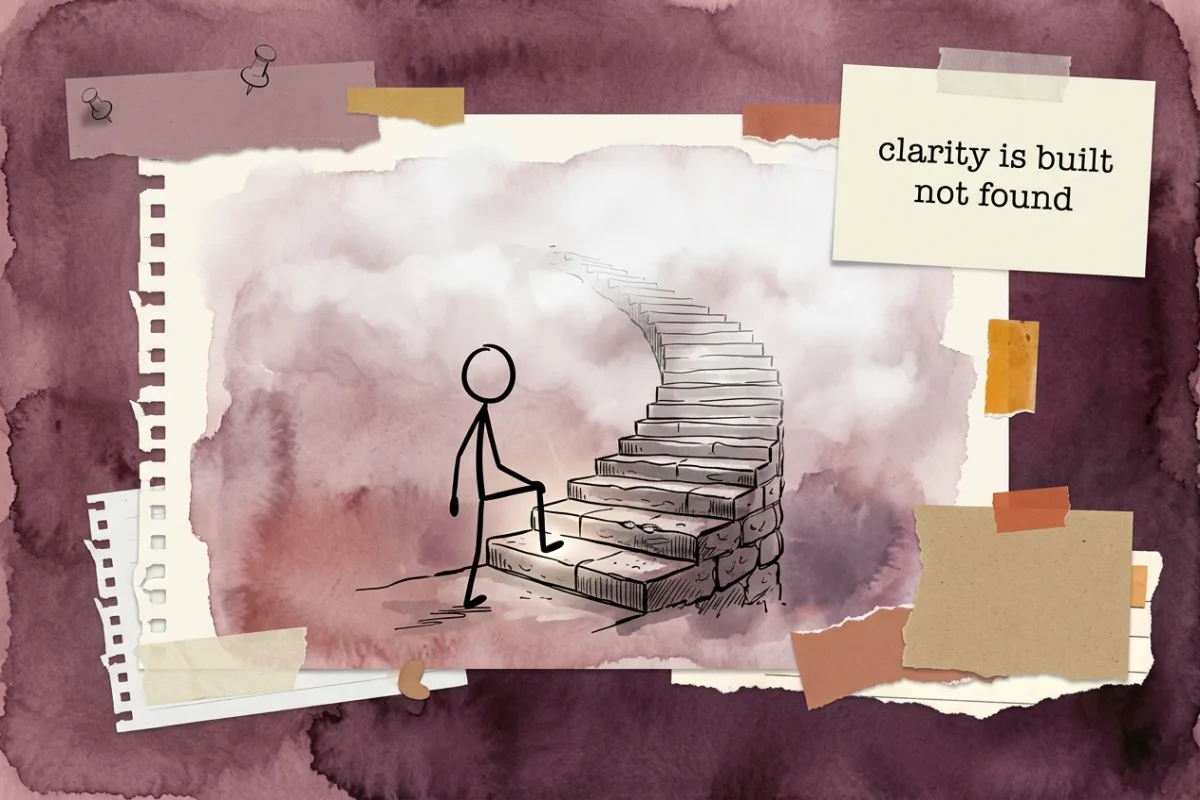
Here's the thing about clarity: You think you need clarity before you can act. But clarity comes FROM action. Not before it.
You will never think your way out of confusion. You will never research your way to certainty. You will never plan your way to confidence.
You will move your way out.
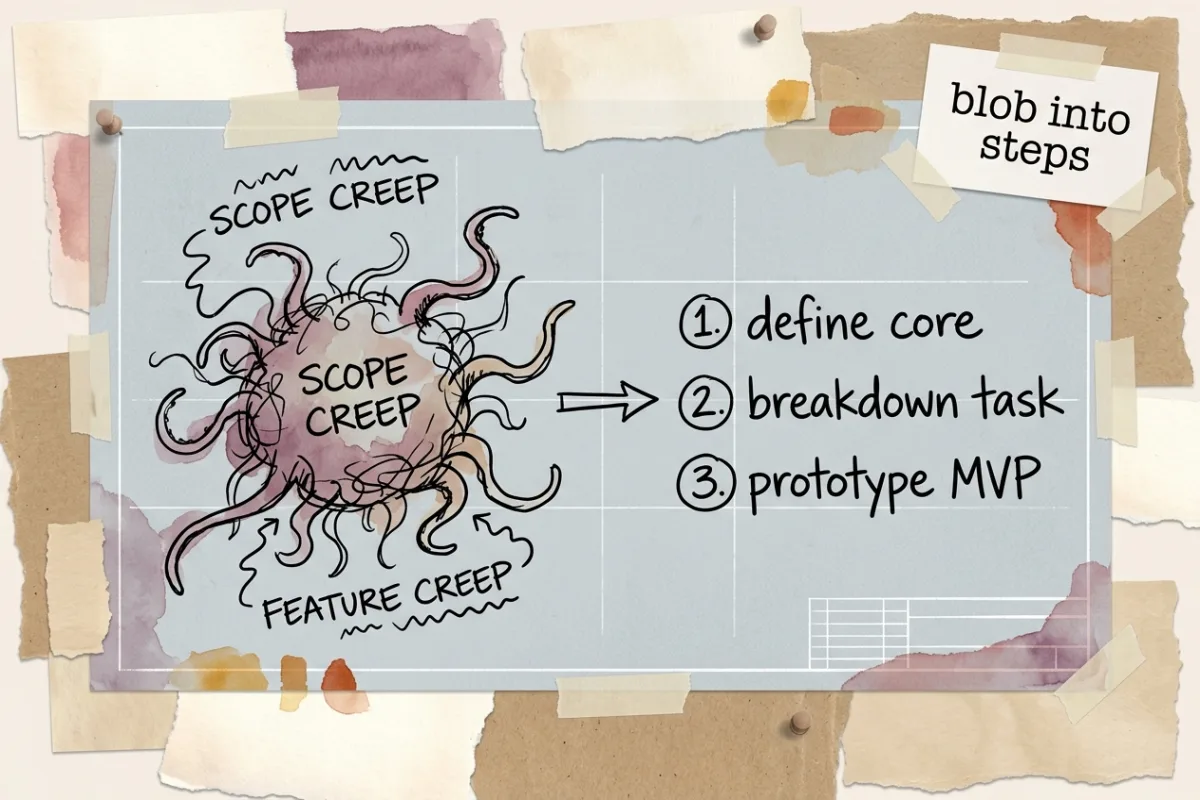
The question isn't "What do I need to know before I can start?" The question is: "What's the smallest move I can make to learn what I need to know?"
When you're stuck on whether to make a move, ask yourself: "If I'm 80, looking back on my life, which will I regret more: trying and failing, or never trying at all?"
Most of the time, the risk of inaction is higher than the risk of action. We just don't quantify it.
Clarity comes from action, not thought. You will never think your way out of confusion—you will move your way out.
The Bottom Line
The move you're avoiding isn't going away. It's been living in your chest for months. Maybe years. It shows up at 3am. It whispers during boring meetings. It screams every Sunday night.
You already know what you want to do. You're just waiting for someone to give you permission—or for the fear to magically disappear.
Neither of those things is coming.
The fear doesn't go away. You just learn to move with it.
So let me give you the permission anyway, since apparently that helps:
You're allowed to want what you want. You're allowed to build what you want to build. You're allowed to become who you want to become. And you're probably more ready than you think.
The cost of waiting one more year is almost certainly higher than the cost of moving now. The data is clear. The research is clear. The stories are clear.
The only question left is: How much longer are you willing to pay the tax?
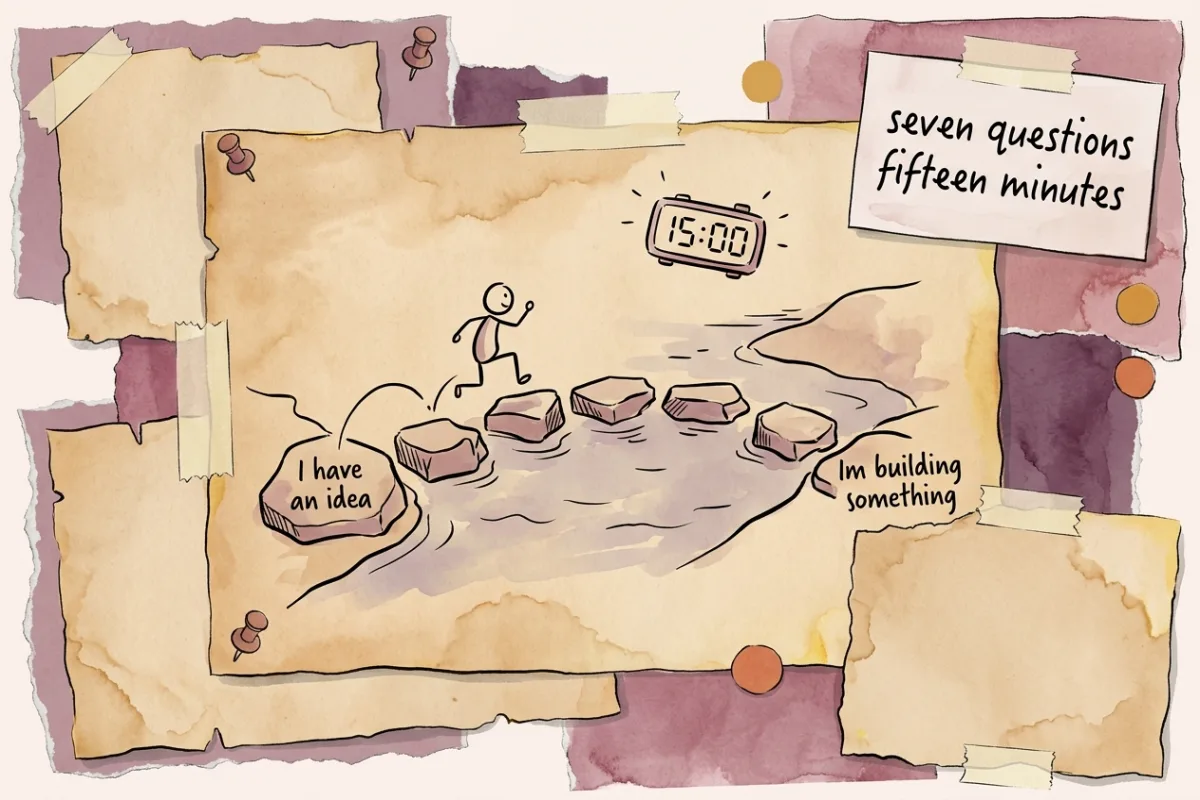
Get one email a week.
A 5-minute read on shipping faster, thinking clearer, and actually finishing what you start. Free.
One a week, give or take. Unsubscribe in one click.
Ready to actually ship?
Reading these essays is the warm-up. Book a free Build Partner call and let's get your project moving.
Request a Free Build Partner Call