
Systems for the Unreliable Human
Build for the version of yourself that's tired, distracted, and human. The other version isn't who shows up on Tuesday at 9pm.
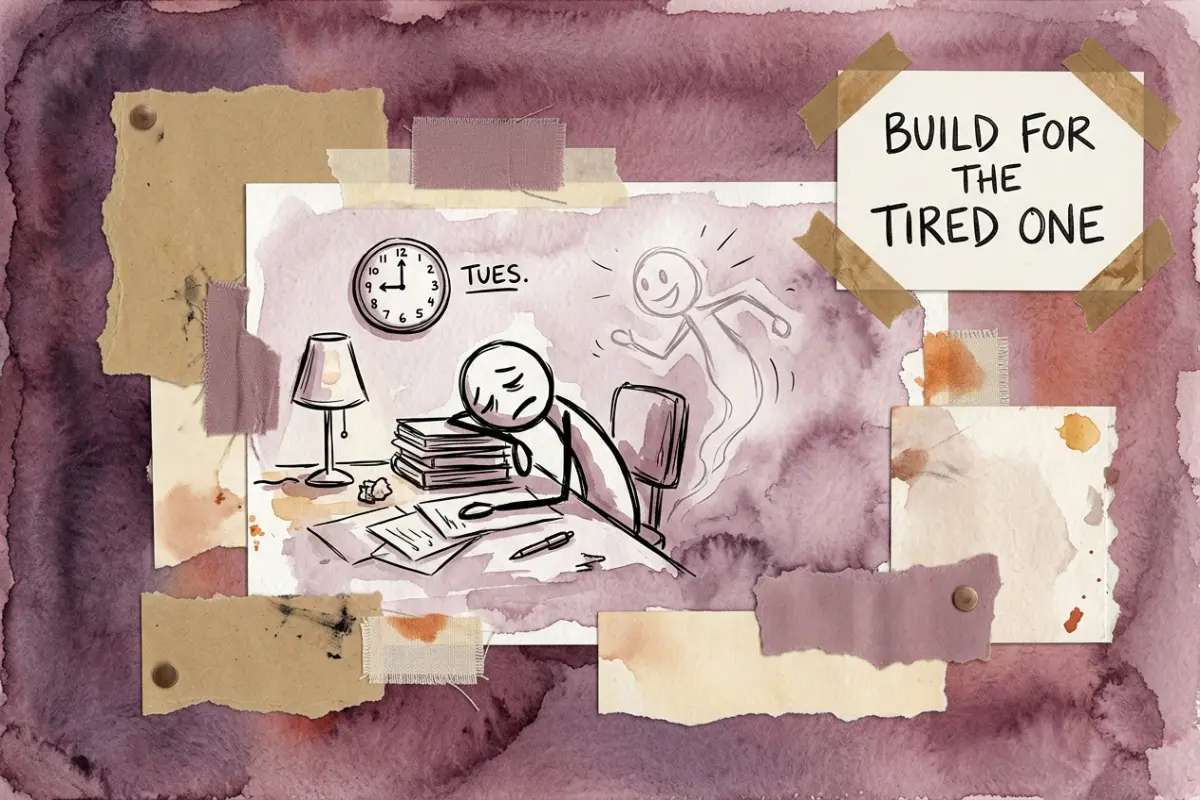
You design systems for the version of yourself that's rested, focused, and motivated. That's not the version that shows up on Tuesday at 9pm. The version that shows up is tired and human, and the system has to work for her.
Systems for the Unreliable Human
Build for the version of yourself that's tired, distracted, and human. The other version isn't who shows up on Tuesday at 9pm.
There is a version of you on LinkedIn. She wakes up at 5am. She journals. She does cold plunges. She has a four-hour deep work block before noon. Her inbox is at zero. Her water intake is impressive. Her habits are featured on a podcast.
There is also a version of you that exists in the actual world.
The actual version is, right now, looking at a Slack thread with 42 unread messages. She had a Diet Coke for breakfast and a granola bar for lunch. She has not done anything she would describe as "deep work" in nine days. She has been carrying the same three open decisions in her head since Monday and is, structurally, in the middle of the worst Tuesday she has had this month.
The system you have been designing for the LinkedIn version is the wrong system.
The LinkedIn version doesn't need a system. The LinkedIn version is functional. She would ship the project on willpower alone. The version that exists is the version who actually shows up at 9pm on a Tuesday with the motivation tank at 6%, and that's the version your operation depends on. If your system requires her to be the LinkedIn version to function, your system is going to fail, predictably, on a normal Tuesday, in a way you've been mistaking for a personal flaw for years.
Stop building for the LinkedIn version. The LinkedIn version isn't coming. Build for the one you actually have.
What Wendy Wood proved at USC
Wendy Wood is a USC professor of psychology and business who has spent thirty years studying habits. In 2019 she published Good Habits, Bad Habits: The Science of Making Positive Changes That Stick, summarizing the research program of her career.
The headline finding, replicated dozens of times, is that roughly 43% of the things humans do on any given day are habitual. They happen without conscious decision-making. They're triggered by environment, time, and context, not by willpower. The choice you think you're making at 9pm — open laptop versus open Netflix — is actually a habit running, with the surface-level "decision" mostly being post-hoc narration.
Wood's other finding, more counterintuitive, is that the people we describe as "disciplined" do not, on close inspection, exert more willpower than the rest of us. They have engineered environments that produce the right behaviors automatically. They keep a water bottle on the desk, so they drink water. They put running shoes by the bed, so they run. They have a calendar that auto-blocks 9-11am for deep work, so they do deep work. The "discipline" is invisible because the discipline isn't in the moment of action. The discipline was in setting up the environment, weeks earlier, when the willpower was high.
This is the part most senior operators miss when they're trying to build a sustainable operation.
You don't have a willpower deficit on Tuesday at 9pm. You have an environment that requires willpower to produce the right behavior, and willpower at 9pm on Tuesday is, by Wood's research and forty years of replication, structurally not available.
The fix is not to want it more. The fix is to engineer the environment so the right behavior happens automatically, on a schedule, without requiring the 9pm version of you to make the right choice.
What Dan Ariely documented in 2008
Dan Ariely is a Duke behavioral economist whose 2008 book Predictably Irrational sold over a million copies and gave a vocabulary to a generation of operators who had been confused by why humans don't behave the way classical economic theory says they should.
Ariely's argument is that human irrationality is not random. It is systematic. The same biases show up, in the same shapes, across cultures and contexts and incomes and education levels. Humans systematically over-value defaults. Humans systematically under-value future rewards relative to immediate ones. Humans systematically choose the middle option of three. Humans systematically commit more readily to small starts than big finishes.
The vocabulary Ariely brought to behavioral economics — "predictably irrational" — is what makes the engineering possible. If irrationality were random, you couldn't design around it. Because it's systematic, you can.
Apply Ariely's lens to your unreliable Tuesday-at-9pm self. She is not a random failure mode. She is a predictable failure mode. She predictably picks the easiest choice. She predictably defers anything that requires energy. She predictably chooses the immediate small reward (close laptop, watch a show) over the delayed large reward (ship the project on Friday). She predictably does the thing that is already in front of her, regardless of whether it's the thing that matters.
The fact that Tuesday-at-9pm self is predictable is the entire opportunity. You can design around her. You don't have to convert her into the LinkedIn version. You have to build the environment so that the easiest, most-defaultable, most-already-in-front-of-her thing is also the right thing.
The Pit Crew analogy holds. An F1 driver doesn't change their own tires, manage their own fuel strategy, monitor their own gearbox. They have a crew. The crew exists because at 200 mph, the driver's cognitive bandwidth is fully spent on driving. The driver is unreliable for tire-change tasks. The pit crew makes the unreliability irrelevant.
Your operation needs the same shape. Your unreliable-human self is the driver. The system is the pit crew. The system is what makes the unreliability irrelevant.

What Marshall Goldsmith named in 2015
Marshall Goldsmith — whose earlier book I cited in the fractional CTO post — published Triggers: Creating Behavior That Lasts in 2015. The book is the result of his coaching work with several hundred Fortune 500 executives over thirty years.
Goldsmith's central observation is that the gap between who we want to be and who we actually are, in the moment, is governed not by willpower but by triggers. Triggers are environmental cues that activate behavior. The phone on the nightstand triggers the morning scroll. The bowl of M&Ms on the kitchen counter triggers the snack. The first email of the day triggers a reactive day. The triggers fire whether you wanted them to or not, because the triggers are environmental and the environment is older and louder than your stated intention.
Goldsmith's coaching method, refined across thirty years, is not about helping executives want it more. It's about helping them identify their triggers and then redesign their environment so that the right triggers fire, automatically, when the executive is too tired to choose.
The most useful tool in the book is what Goldsmith calls Daily Questions. A short list of questions you ask yourself, every evening, in writing. Not "did I succeed today" — that's a results question and most people answer it dishonestly. The Goldsmith form is "did I do my best to..." followed by the specific behavior. "Did I do my best to be a good listener today." "Did I do my best to write for an hour today."
The Daily Questions list is itself a piece of environmental engineering. It is a trigger you set up, in a moment when you have the bandwidth, that fires reliably every evening, regardless of what kind of day you had. The list does what willpower can't. It surfaces the gap between intention and behavior, gently, on a daily cadence, without requiring the intervention of the LinkedIn version of you.
You don't have a Daily Questions list. You don't have most of the engineered triggers Goldsmith would tell you to set up. You've been running on willpower, expecting the LinkedIn version of yourself to bridge the gap, and the LinkedIn version has not been showing up reliably.
She isn't going to.
Three rules to build for the version that actually shows up
You don't fix this with a 5am routine. You fix it with three pieces of environmental engineering, designed for the worst-case-Tuesday version of yourself.
1. Pre-decide the friction-free path on Sunday. Before the week starts, write down what one thing you'll do, every weekday, regardless of what else is happening. Make it small enough that the 9pm version of you can do it on her worst night. The pre-decision is the trigger. Wendy Wood's research is unambiguous that the cognitive cost of a pre-decided behavior is much lower than a real-time decision. The Sunday version of you, who has bandwidth, decides for the Tuesday version of you, who doesn't.
2. Engineer the environment to produce the right default. Walk through your physical and digital environment with one question. What is the default thing the 9pm version of me will do here. Wherever the answer is "the wrong thing," redesign the environment. Move the laptop closer to the bed and the phone farther. Pre-write tomorrow's first email. Set up the Linear ticket for the small piece of work. Make the right thing the path of least resistance. Remove every required willpower step. Ariely's research is unambiguous that defaults dominate in tired states. Engineer the defaults.
3. Run a one-question evening review. Goldsmith's move, simplified. Every evening, in writing, one question. Did I do the one thing I pre-decided this morning. Yes or no. Don't analyze. Don't explain. Just answer. The pattern of yes/no across two weeks is the diagnostic data. If the no's cluster on certain days, certain times, certain conditions, the data tells you where the system is failing. The system can be redesigned. The willpower cannot.
If you want a second voice in the room while you build the engineered version of your operation, that's exactly what a 6-Week Build Partnership is.

The reframe
You don't have a discipline problem.
You have a design problem. The system you've built requires the LinkedIn version of you to function, and the version that shows up on Tuesday at 9pm is structurally not the LinkedIn version, and you've been mistaking that mismatch for a personal flaw.
Wendy Wood proved 43% of behavior is habitual. Dan Ariely proved irrationality is predictable. Marshall Goldsmith spent thirty years coaching executives to engineer triggers instead of demanding willpower.
You don't need a more disciplined version of yourself. You need a system that works for the version of yourself that's already here.
Pre-decide on Sunday. Engineer the defaults. Run the one-question evening review.
The Pit Crew makes the driver's unreliability irrelevant. Build the Pit Crew.
The driver is fine. The driver was always going to be tired. That was the design assumption from the start.
More for The Burnout Cycler
 8 min read
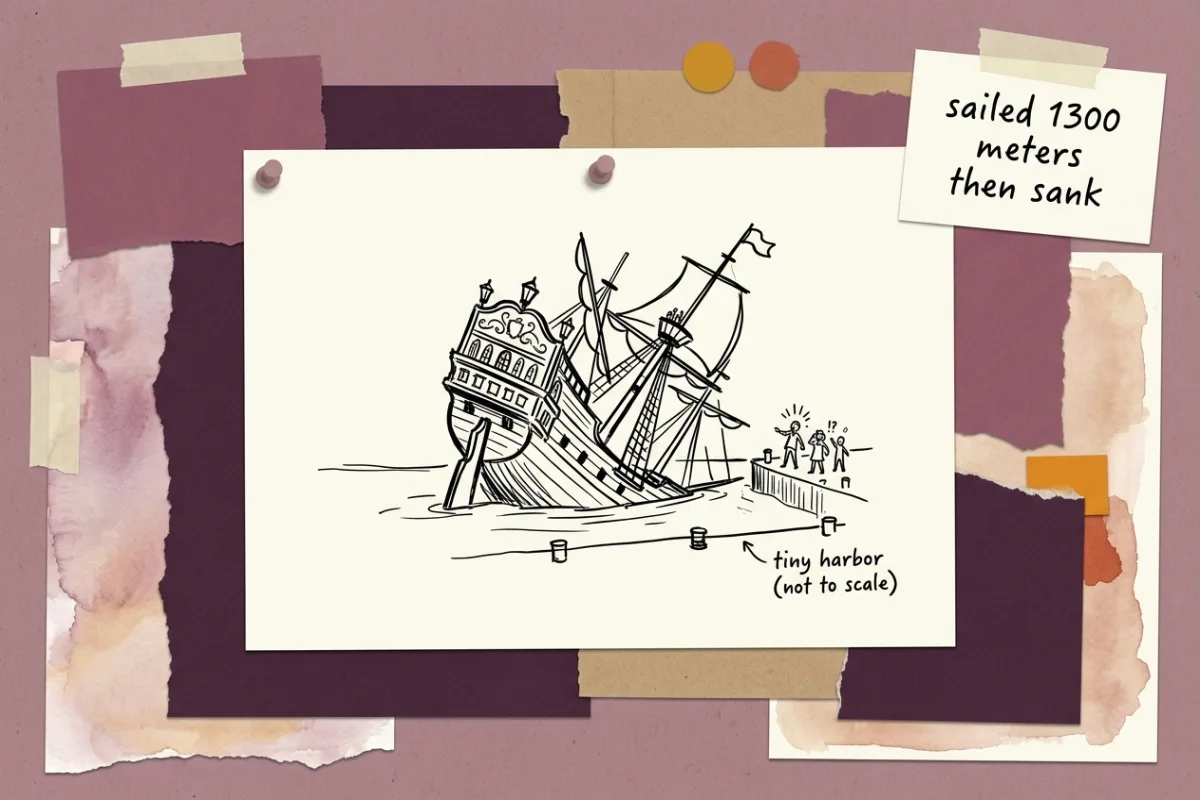
The Vasa Problem
Why brilliant strategies sink in the harbor, and what the Swedish navy spent 333 years proving.
 9 min read
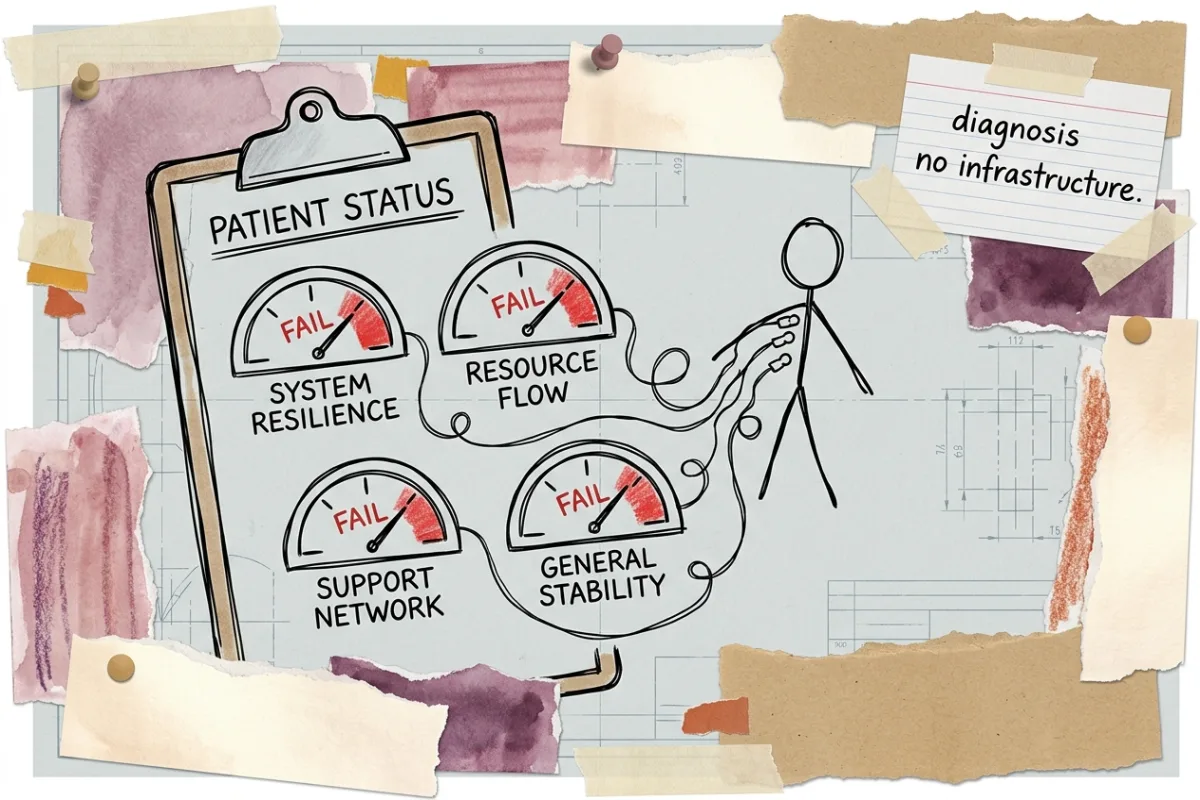
Burnout Is a Systems Diagnosis
Burnout isn't a character flaw. It's the receipt for an operating system that demanded heroics every day.
 8 min read
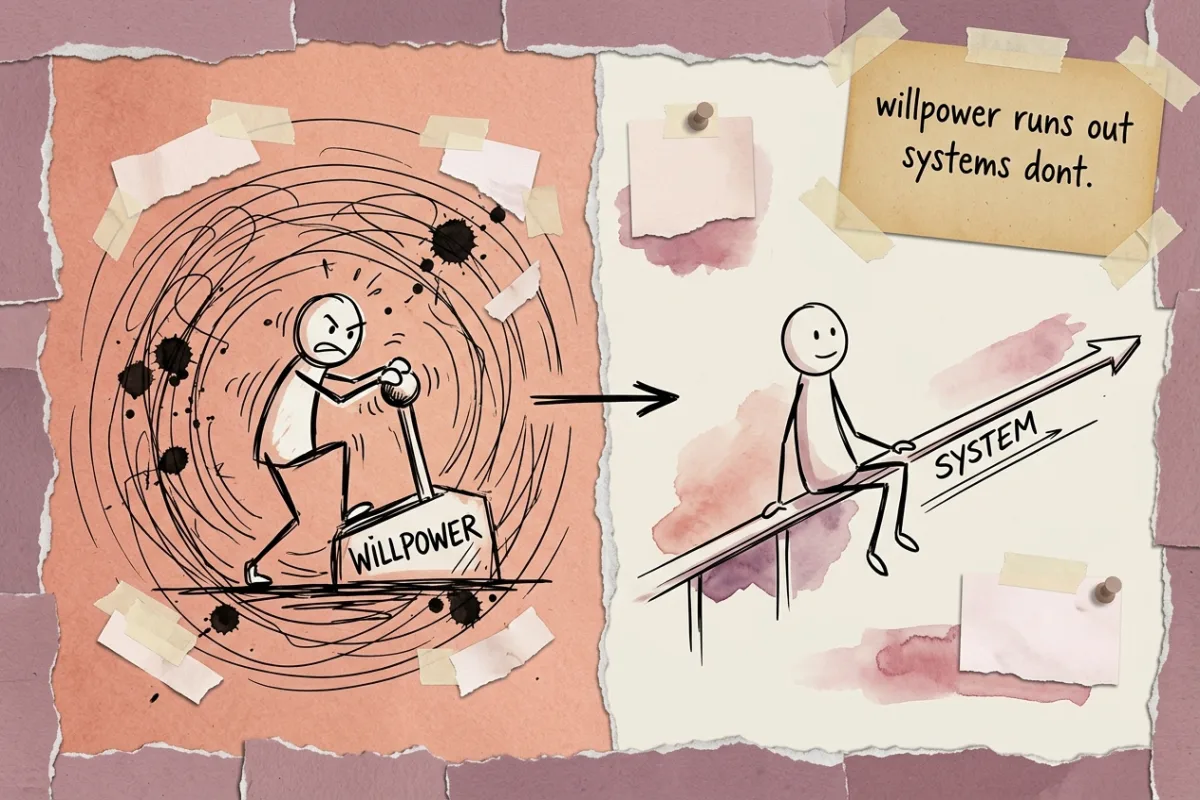
Systems Beat Self-Loathing
The 2am self-blame spiral isn't a character flaw. It's the receipt for a system you never built.
Get one email a week.
A 5-minute read on shipping faster, thinking clearer, and actually finishing what you start. Free.
One a week, give or take. Unsubscribe in one click.
Ready to actually ship?
Reading these essays is the warm-up. Book a free Build Partner call and let's get your project moving.
Request a Free Build Partner Call